

10 Chic Ways To Style A Scarf (Trendy Styling Ideas I Swear By!)
There are few accessories as transformative and versatile as a well-styled scarf. Whether draped casually around your shoulders or knotted with intention at your neck, a scarf has the power to elevate even the simplest outfit into something memorable. After years of experimenting with different fabrics, knots, and placements, I have discovered that mastering scarf styling is not about following rigid rules but rather understanding how this single piece can work across seasons, occasions, and personal aesthetics.
The beauty of a scarf lies in its adaptability. A silk square can transition from a professional neck accent in the morning to a bohemian headwrap by evening. A chunky cashmere wrap transforms from a cozy layer on chilly days to a sophisticated shoulder drape for indoor gatherings. This multifunctional nature makes scarves an essential component of any thoughtfully curated wardrobe.
What makes scarf styling particularly relevant today is the renewed interest in accessories that offer both form and function. Fashion has shifted toward pieces that allow for personal expression without requiring an entirely new outfit. Scarves fit perfectly into this philosophy. They introduce color, pattern, and texture while remaining practical and comfortable. From the runways of Paris to street style moments captured in New York, scarves have reclaimed their position as a statement accessory that speaks to both timeless elegance and contemporary flair.
The following styling methods represent my most trusted approaches to wearing scarves. These are techniques I return to repeatedly because they work across different body types, personal styles, and occasions. Some are classic methods refined over decades, while others reflect current trends that have proven their staying power. Each offers a unique way to incorporate this versatile accessory into your daily wardrobe rotation.
The Classic French Knot
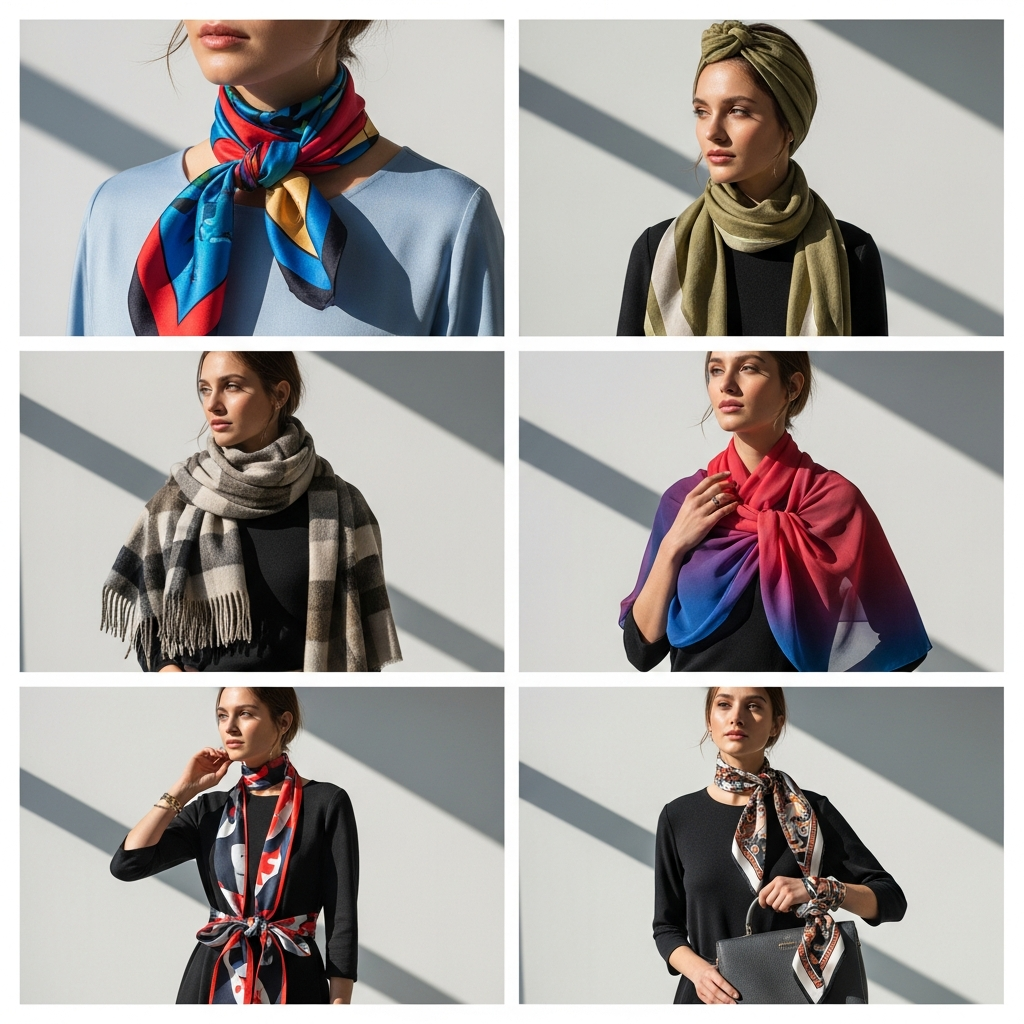
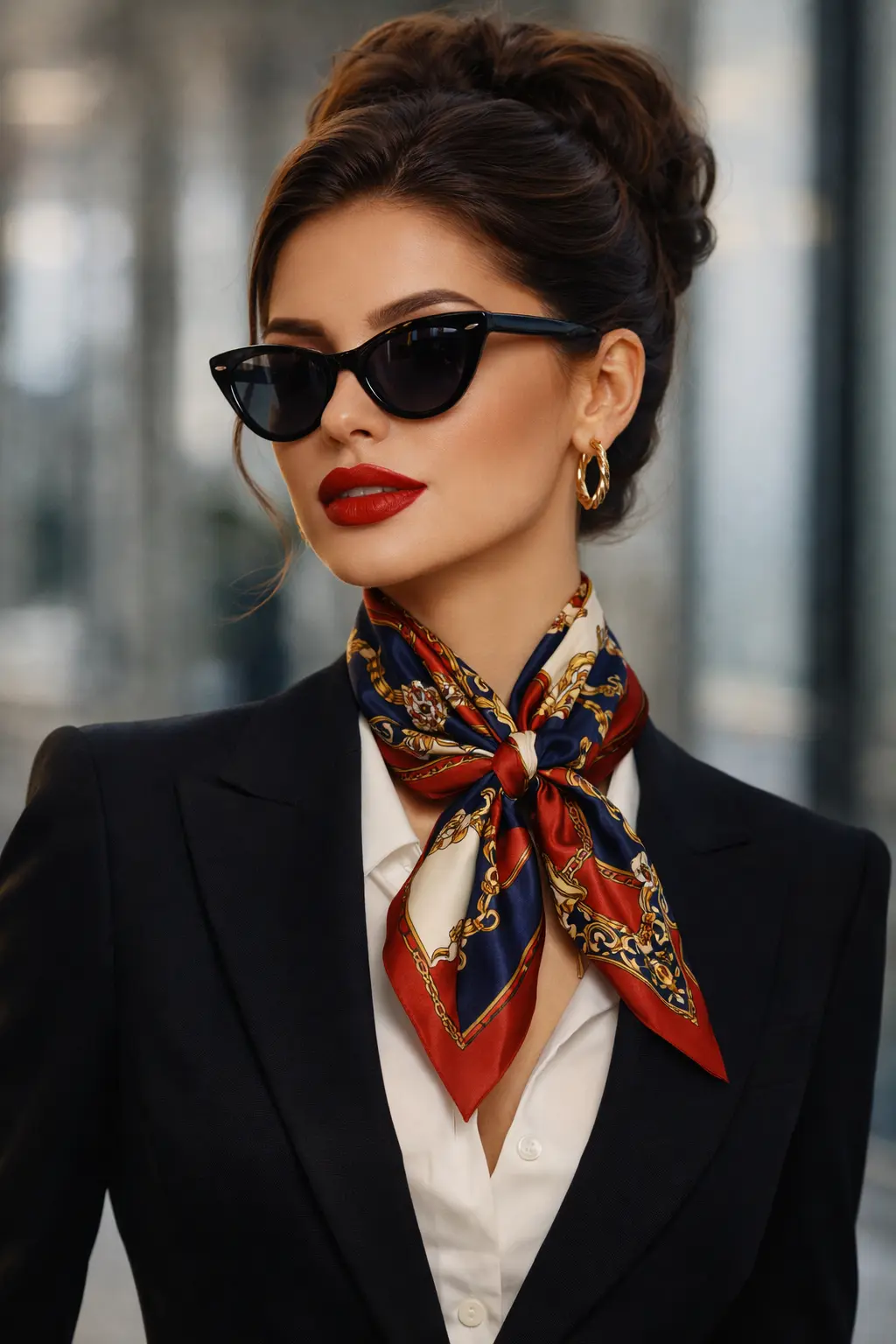
The French knot remains one of the most refined ways to wear a scarf. This method works particularly well with rectangular silk or satin scarves and creates an effortlessly polished appearance. Begin by folding your scarf lengthwise until it forms a narrow band. Drape it around your neck with both ends hanging evenly in front. Cross the ends behind your neck and bring them back to the front, then tie a simple knot just below your collarbone.
This styling approach works beautifully with button-down shirts, blazers, and sweaters with open necklines. The key is keeping the knot loose enough to maintain an air of ease while ensuring it sits securely in place. I find this method particularly effective for professional settings where you want to add personality without overwhelming your outfit. The French knot also has the advantage of being adjustable throughout the day, allowing you to tighten or loosen it based on temperature changes or comfort preferences.

Triangle Scarf Drape
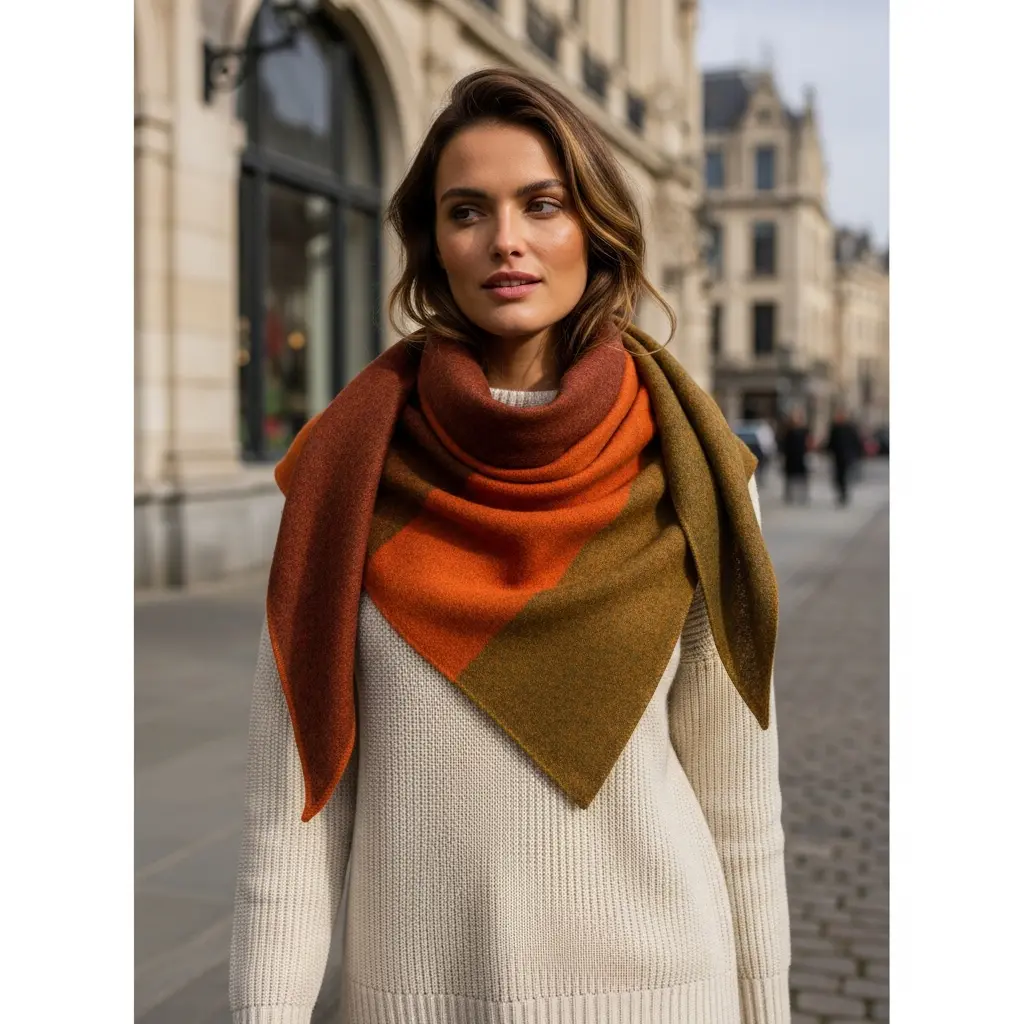
The triangle scarf has experienced a significant resurgence and represents one of the most elegant ways to add dimension to your upper body. This technique works best with square scarves in wool, cashmere, or substantial silk. Fold your square scarf diagonally to create a triangle shape. Position the longest edge against the back of your neck with the pointed end facing downward toward your chest. Bring both side corners around to the front and tie them in a loose knot.
you may also like this:How To Layer Your Clothes Like A Pro Stylist!
This styling method creates beautiful lines that complement both casual and dressed-up looks. The draping effect adds visual interest to simple sweaters, turtlenecks, and even dresses. I particularly appreciate how this style allows the scarf pattern to remain visible while providing warmth and coverage. For a more relaxed interpretation, allow the knot to sit off to one side rather than centered. This asymmetrical placement feels modern and prevents the look from appearing too formal or constructed.
Scarf Belt Alternative
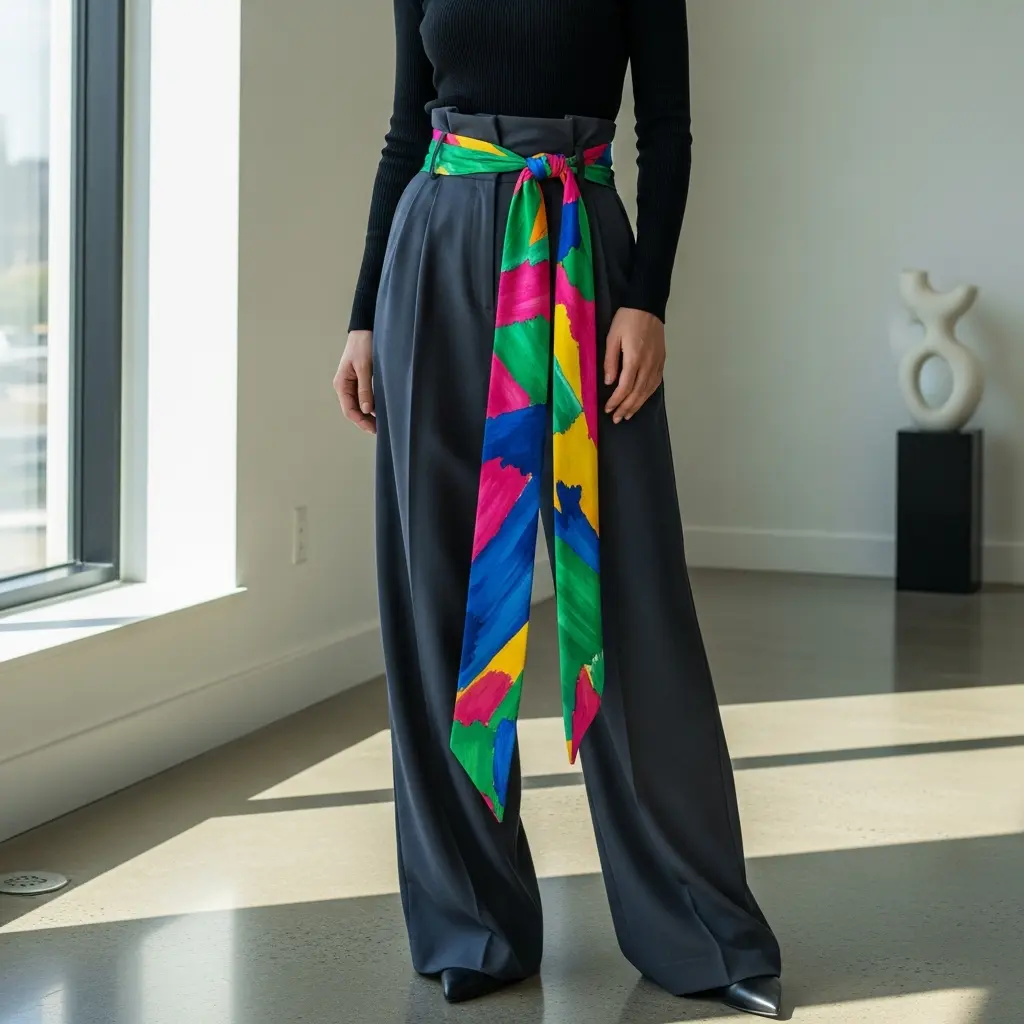
Using a scarf as a belt has become one of my favorite unconventional styling tricks. This approach works with both long, narrow scarves and larger square styles that can be folded or twisted. Thread the scarf through your belt loops or simply wrap it around your waist over dresses, tunics, or high-waisted trousers. Tie it at your natural waist or slightly to the side for visual interest.
The scarf belt serves multiple purposes beyond pure aesthetics. It adds definition to loose silhouettes, introduces a pop of color or pattern to neutral outfits, and provides a softer alternative to traditional leather belts. Unlike rigid belts, scarves move with your body and offer comfort throughout the day. This method works especially well during transitional seasons when you want to add a layer of visual interest without actual warmth. I often choose printed or brightly colored scarves for this technique to create a focal point that draws the eye to the narrowest part of the waist.
Shoulder Wrap Elegance
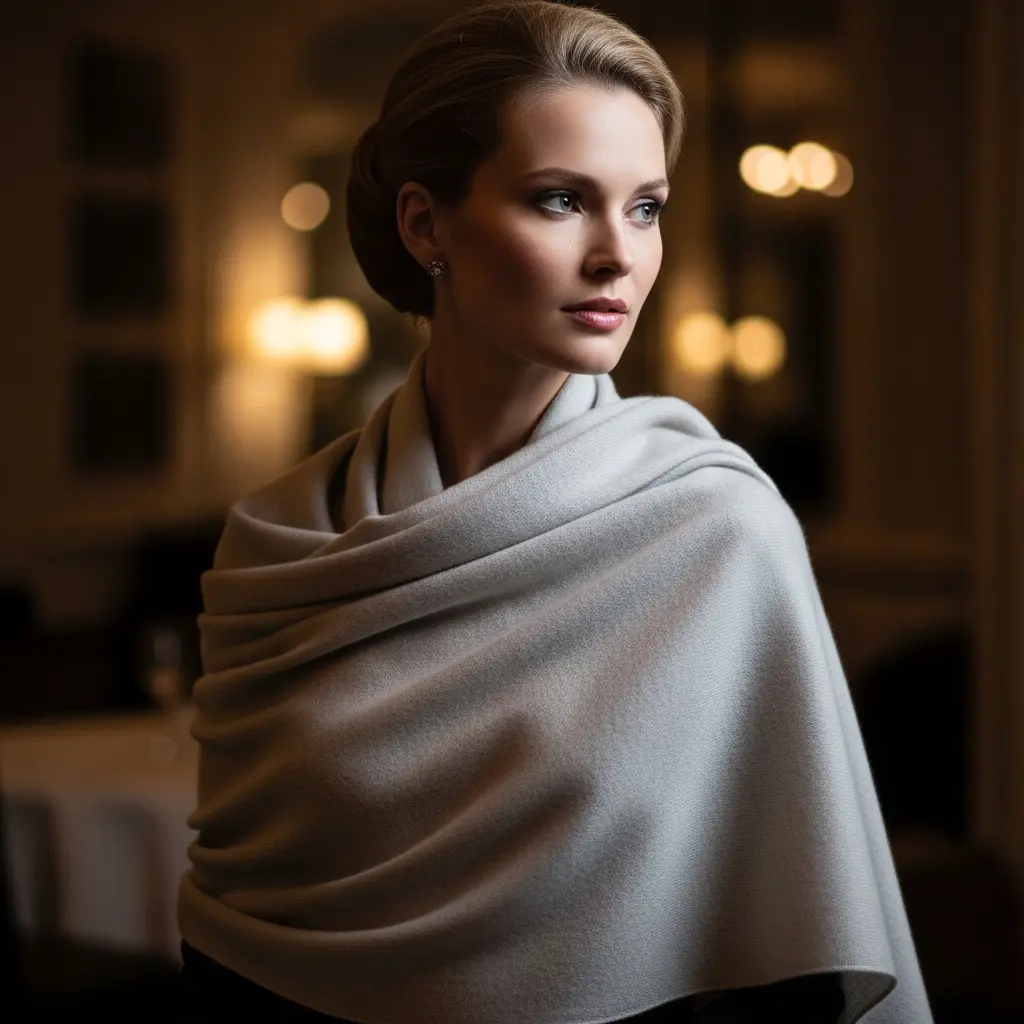
The shoulder wrap represents one of the most versatile styling methods, working across seasons and occasions. This technique is particularly effective with larger rectangular or square scarves in medium to heavyweight fabrics. Drape the scarf across your shoulders like a shawl, allowing the ends to fall naturally down your front or back depending on your preference.
For a more secure fit, you can cross the ends in front and tuck them into your waistband or belt. Alternatively, leave them loose for a flowing, romantic effect. I find this style especially useful during temperature transitions when you need an extra layer that can be easily removed. The shoulder wrap adds sophistication to sleeveless dresses, provides coverage over bare shoulders in professional settings, and creates an elegant silhouette when worn over coats and jackets. This method also allows you to showcase beautiful scarf designs that might be hidden in more compact knot styles.
The Effortless Neck Loop
Sometimes the most impactful styling is also the simplest. The neck loop requires minimal effort but delivers maximum effect. Take a long scarf and drape it around your neck, allowing both ends to hang at equal or intentionally unequal lengths. The beauty of this method lies in its simplicity and the way it frames your face while adding texture and color near your neckline.
This approach works with virtually any scarf length or material. Chunky knit scarves create a cozy, casual vibe perfect for weekend outings. Silk scarves in this configuration add polish to office attire. The neck loop also serves as an excellent base for experimentation. You can adjust the drape, add a knot at the front or side, or tuck one end into your coat for asymmetrical interest. I rely on this method when rushing out the door because it looks intentional while requiring almost no time or technique to execute properly.

Headband and Bandana Styling
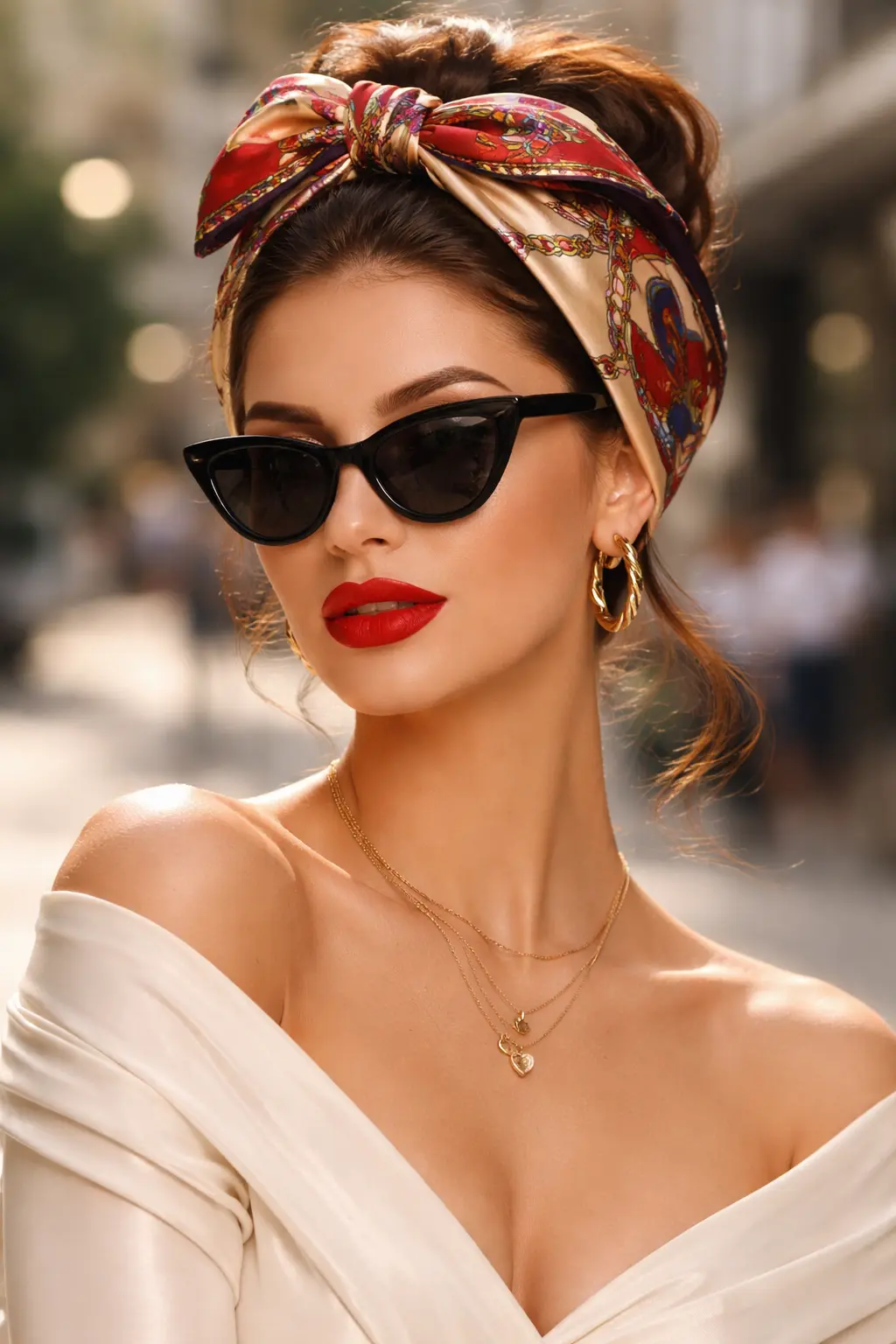
Wearing scarves in your hair offers a refreshing alternative to traditional hair accessories. This styling method works particularly well with square silk scarves or long, narrow styles. For a bandana look, fold your scarf into a triangle and then fold the pointed end toward the long edge to create a band. Place this across your forehead or further back on your head, then tie the ends at the nape of your neck or on top of your head.
For a more subtle approach, fold the scarf into a slim band and wear it as a headband, tying it beneath your hair at the back. This method is practical for keeping hair in place on windy days or during physical activities while adding a stylish element to your overall look. The headscarf styling also evokes vintage glamour reminiscent of classic Hollywood actresses. I find this approach particularly useful on days when my hair needs a break from heat styling or when I want to add visual interest to a simple outfit. The scarf draws attention upward, framing the face beautifully.
Bag Handle Accent
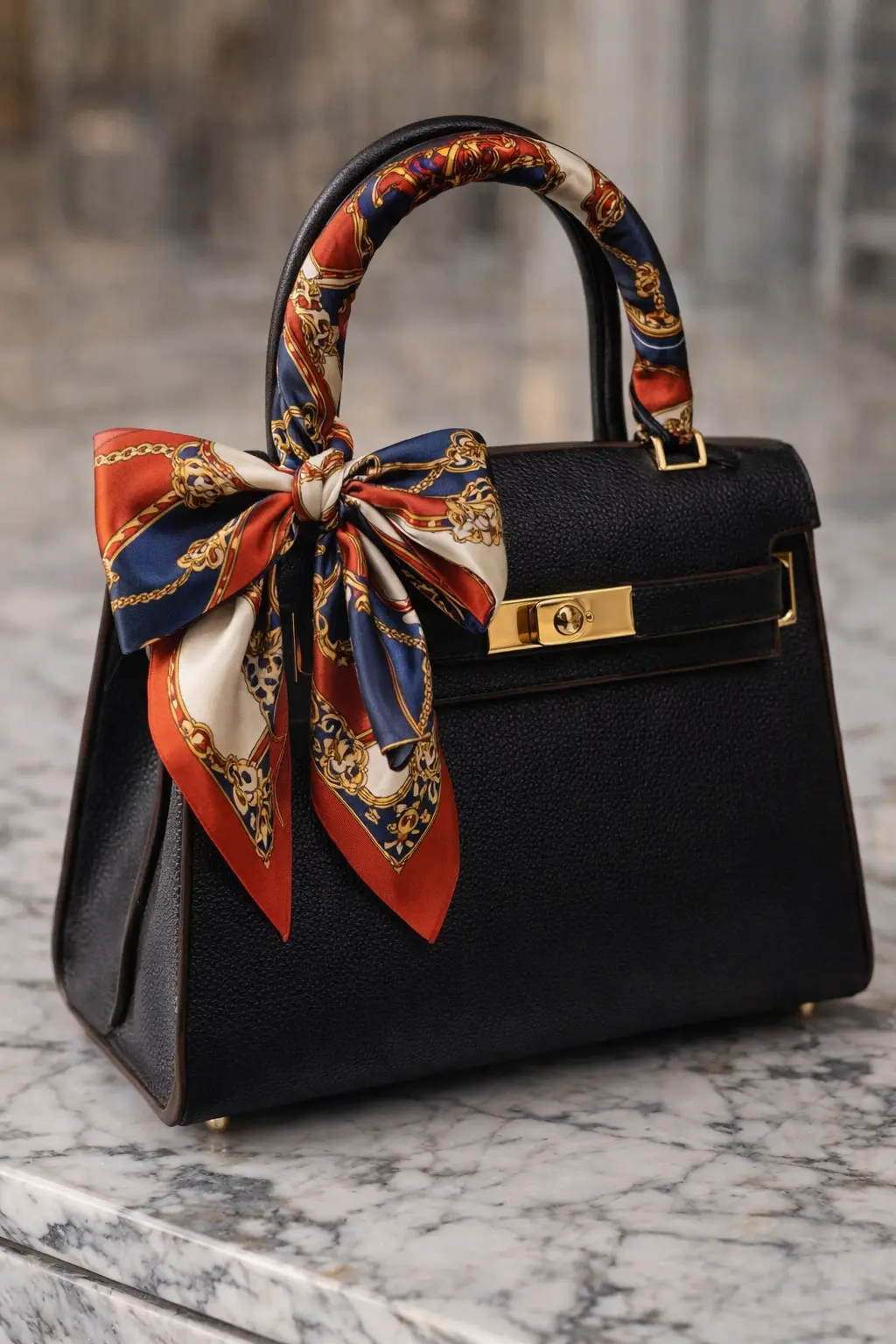
Accessorizing your handbag with a scarf has become an increasingly popular way to personalize your accessories while extending your scarf collection’s versatility. Choose a small to medium silk scarf and tie it around one or both handles of your bag. You can create a simple knot, a bow, or wrap the scarf multiple times around the handle for a more substantial look.
This styling method allows you to coordinate your accessories with your outfit or introduce complementary colors that might not appear elsewhere in your ensemble. The bag accent works with virtually any handbag style but looks particularly striking on structured top-handle bags and classic totes. I appreciate this approach because it breathes new life into bags I have owned for years. By changing the scarf, you can completely transform the bag’s appearance and make it work with different seasonal wardrobes. This method also protects leather handles from wear while adding a luxurious, considered touch to your overall presentation.
Layered Under Coats and Jackets
One of the most sophisticated ways to wear a scarf involves layering it underneath coats and jackets rather than over them. This technique creates clean lines while allowing the scarf to peek out attractively at your neckline. Drape a scarf around your neck using your preferred method, then put on your coat or jacket. Adjust the scarf so that it shows at the collar, creating a pop of color or pattern that frames your face.
This styling works particularly well with tailored coats, leather jackets, and structured blazers. The scarf adds warmth and visual interest without the bulk of having it wrapped on top of your outerwear. I find this method especially useful for transitional weather when you need layers but want to maintain a streamlined silhouette. The layered approach also prevents your scarf from getting disheveled by wind or movement throughout the day. For added polish, coordinate your scarf color with other accessories like gloves or handbags to create a cohesive, intentional appearance.
Choosing the Right Scarf for Your Style
Selecting scarves that align with your personal aesthetic while offering versatility requires consideration of several factors. Fabric choice significantly impacts how a scarf drapes and which styling methods work best. Silk scarves offer lightweight elegance and work beautifully for neck and hair styling. Cashmere and wool provide warmth and substance, making them ideal for shoulder wraps and layered looks. Cotton and linen scarves offer breathable options for warmer months while maintaining structure for various knot styles.
Color and pattern selection should balance personal preference with wardrobe coordination. Solid neutrals in black, cream, camel, and gray provide maximum versatility and can be paired with virtually any outfit. These foundational pieces serve as workhorses in your scarf collection. However, do not shy away from prints and bold colors. Floral patterns, geometric designs, and artistic motifs allow for creative expression and can transform simple outfits into statement looks. I recommend building a collection that includes both neutral basics and more adventurous pieces that reflect your personality.
Size matters when it comes to scarf styling versatility. Small square scarves excel at neck styling and bag accents. Medium rectangular scarves offer flexibility for various knot techniques and moderate draping. Large wraps and shawls provide maximum styling options from shoulder coverage to dramatic draping effects. Having representation across these size categories ensures you have the right scarf for any styling intention or outfit requirement.
Practical Considerations for Everyday Wear
Successfully incorporating scarves into your daily routine requires attention to practical details beyond pure aesthetics. Consider the care requirements of different fabrics before purchasing. Silk scarves often require dry cleaning or careful hand washing, while wool and cashmere need proper storage to prevent moth damage. Cotton scarves generally offer easier maintenance but may lack the luxury feel of natural fibers. Understanding these considerations helps you build a collection that fits your lifestyle rather than creating maintenance burdens.
Seasonal appropriateness guides when and how to wear different scarf styles. Lightweight silk and cotton scarves work beautifully during spring and summer for neck styling, hair wrapping, and bag accents. As temperatures drop, transition to cashmere, wool, and heavier silk blends that provide actual warmth alongside style. The versatility of scarves means you can wear them year-round by adjusting your styling approach and fabric choices to match the weather.
Storage and organization impact how frequently you actually wear your scarves. Keep frequently worn scarves easily accessible rather than buried in drawers or boxes. Hanging organizers, dedicated scarf hangers, or even decorative hooks allow you to see your collection and grab pieces quickly when getting dressed. Proper storage also maintains the condition of your scarves, preventing wrinkles and damage that could limit their wearability. I have found that treating scarves as a visible part of my wardrobe rather than hidden accessories encourages more consistent use and experimentation with different styling methods.

Building Confidence in Scarf Styling
Many people hesitate to embrace scarf styling because it feels unfamiliar or potentially dated. Building confidence requires practice and experimentation without the pressure of perfection. Start with simple methods like the neck loop or shoulder wrap that require minimal technique. As you become comfortable with basic approaches, gradually explore more complex knots and unconventional placements like the belt alternative or wrist wrap.
Pay attention to how different styling methods interact with your body proportions and personal style. Neck-focused styles draw attention upward and work well for petite frames or when wearing monochromatic outfits. Waist-tied scarves create definition and work beautifully with flowing silhouettes. Shoulder and back draping adds drama and works for those who want to make scarves a focal point of their ensemble. Understanding these relationships helps you choose styling methods that enhance rather than overwhelm your natural proportions.
Do not be afraid to adapt traditional styling methods to suit your preferences. If a classic French knot feels too formal, loosen it considerably or tie it to the side. If a triangle drape seems too structured, allow it to slip slightly off-center. The most successful scarf styling often comes from taking established techniques and personalizing them to reflect your individual aesthetic. This approach ensures that wearing scarves feels authentic rather than costume-like or overly contrived.
Conclusion
Mastering the art of scarf styling opens endless possibilities for refreshing your wardrobe without requiring significant investment or closet space. These ten methods represent foundational techniques that work across seasons, occasions, and personal styles. From the timeless elegance of the French knot to the contemporary appeal of using scarves as belt alternatives, each approach offers unique benefits and aesthetic possibilities.
The true value of incorporating scarves into your style repertoire extends beyond fashion. Scarves provide practical warmth, protect hair from elements, add finishing touches to otherwise simple outfits, and allow for creative expression through color and pattern selection. They represent accessible luxury that anyone can embrace regardless of budget constraints or fashion expertise.
As you explore these styling methods, remember that confidence and personal interpretation matter more than perfect execution. The most stylish scarf looks often appear effortless precisely because they reflect individual taste rather than rigid adherence to rules. Experiment with different fabrics, patterns, and techniques until you discover the approaches that resonate with your aesthetic and lifestyle. With practice and creativity, scarves can become one of your most valued accessories, offering transformation and polish with minimal effort.
Frequently Asked Questions
What type of scarf is best for beginners?
A medium-sized silk or silk-blend square scarf offers the most versatility for those new to scarf styling. These scarves work for multiple techniques including neck knots, hair styling, and bag accents. Look for sizes around 70 to 90 centimeters square. Choose a pattern or color that coordinates with multiple outfits in your existing wardrobe to maximize wearing opportunities while you develop confidence with different styling methods.
How do I keep a scarf from sliding off throughout the day?
Several techniques help secure scarves in place. For neck styles, tie knots slightly tighter initially and adjust looser once secure. Using scarf rings or clips provides additional hold without damaging delicate fabrics. For shoulder drapes, tucking ends into waistbands or belts prevents slipping. Hair scarves benefit from bobby pins hidden beneath the fabric. Choosing fabrics with slight texture rather than extremely slippery materials also improves staying power throughout daily activities.
Can scarves work for professional office environments?
Absolutely. Scarves add polish and personality to professional attire when styled appropriately. Stick with classic methods like the French knot or ascot style in quality fabrics such as silk or lightweight wool. Choose sophisticated patterns or solid colors that complement your professional wardrobe rather than loud or overly casual prints. Ensure your scarf looks intentional and well-maintained rather than hastily thrown on. Scarves can actually elevate simple workwear significantly.
How many scarves should I own?
A well-rounded collection includes five to eight scarves covering different seasons, occasions, and styling needs. Start with two to three neutral solid scarves in silk or lightweight wool that coordinate with everything. Add two patterned scarves in colors you wear frequently. Include one or two seasonal pieces like a chunky knit for winter or a bright cotton for summer. This range provides enough variety for regular rotation without overwhelming your storage space or creating decision fatigue.
How do I care for silk scarves properly?
Most silk scarves require gentle hand washing in cold water with mild detergent specifically designed for delicate fabrics. Avoid wringing or twisting. Roll the scarf in a clean towel to remove excess water, then lay flat to dry away from direct sunlight. Some silk scarves specify dry cleaning only, so always check care labels. Store silk scarves flat or loosely rolled rather than hanging to prevent stretching. Keep them away from rough surfaces that could snag delicate fibers.

2 Comments