5+ Things You Should Never Wear to a Funeral
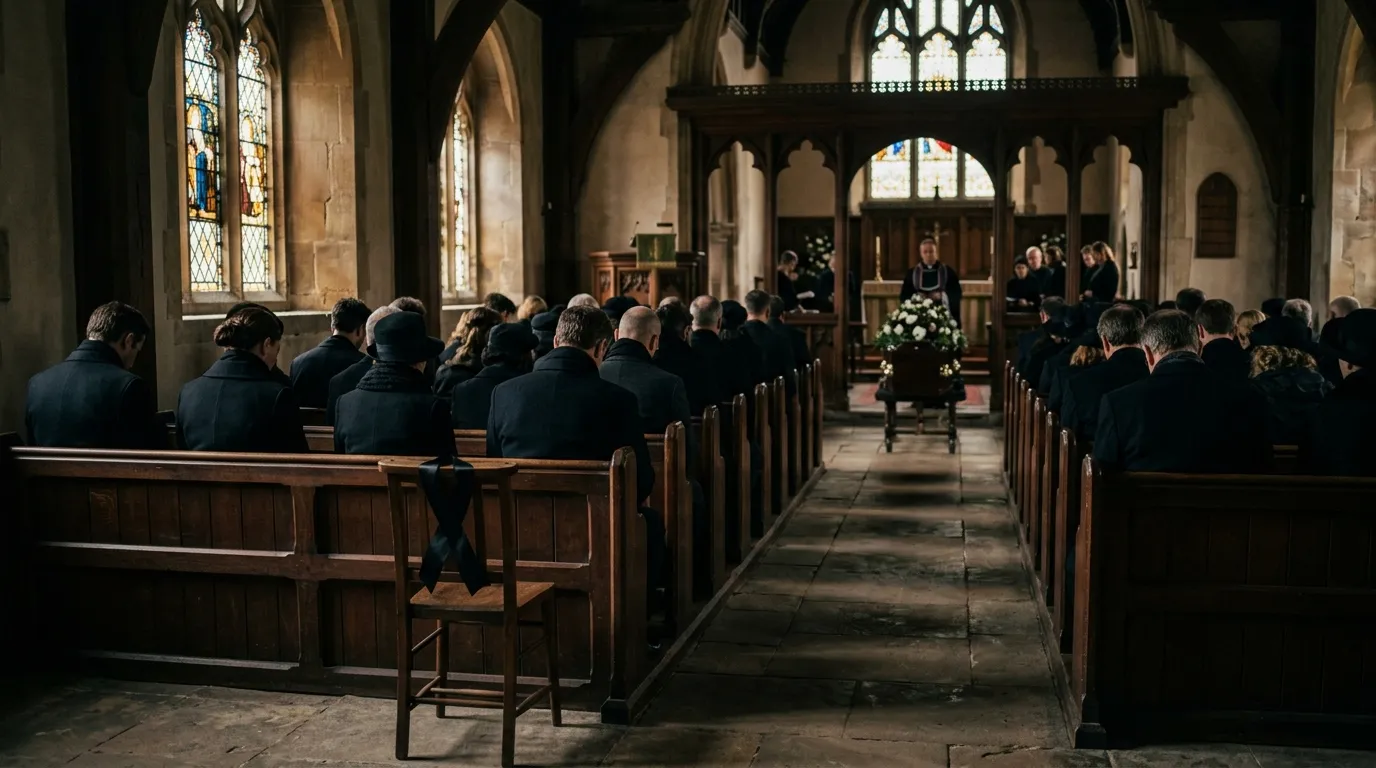
Attending a funeral is one of the most emotionally charged experiences a person can go through. You are there to grieve, to offer comfort, and to honor the life of someone who has passed. In the middle of all that weight, the last thing anyone wants to think about is clothing. Yet what you wear to a funeral communicates something powerful, even before you say a single word. It sends a message to the grieving family about how seriously you take their loss, how much you respected the person who died, and whether you understood the gravity of the occasion.
Funeral etiquette has evolved significantly over the decades. The rigid rule that everyone must appear in head-to-toe black has softened. Families today sometimes request that attendees wear the deceased’s favorite color, or come dressed in something that reflects the personality of the person being remembered. Some services are celebratory in nature, and the dress code reflects that spirit. However, despite this flexibility, certain items of clothing remain universally disrespectful at any funeral service, regardless of the setting or the relationship you had with the deceased.
This article walks you through the most disrespectful things to wear to a funeral, explains why they send the wrong message, and gives you the knowledge to make a thoughtful choice the next time you need to pay your respects. Whether you are attending a traditional church service, a graveside burial, or a celebration of life, the guidance here will serve you well.
1. Bright and Neon Colors That Demand Attention
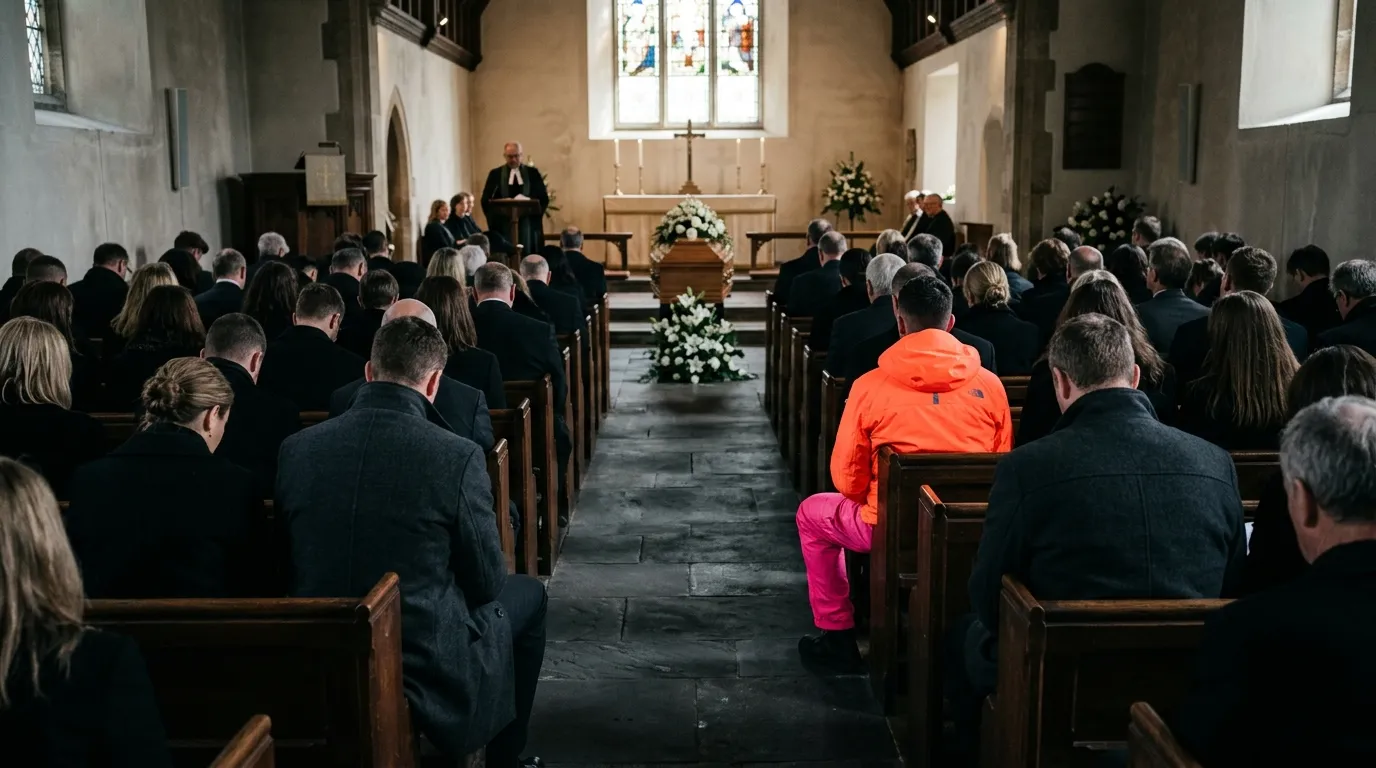
One of the most commonly made mistakes at funeral services is showing up in colors that belong at a birthday party or a beach vacation. Bright red, vivid orange, electric yellow, hot pink, and any shade of neon are all deeply out of place at a funeral. These colors do not simply fail to blend in; they actively compete for attention in an environment where all attention should be directed toward remembrance and mourning.
The tradition of wearing darker tones to funerals is not arbitrary. Black, navy, charcoal, and deep gray are associated with solemnity across many cultures precisely because they communicate restraint. When you walk into a room of grieving people wearing a bright, eye-catching color, you inadvertently shift focus onto yourself. The bereaved family may not say anything, but the impression is made.
There is an important exception worth noting. Some families specifically request that attendees wear color as a celebration of the life lived. If the family has made such a request, honor it. Following the family’s wishes is itself an act of respect. But in the absence of any guidance, always default to subdued, muted, and dark tones.
What to Wear Instead
Opt for black, dark navy, deep charcoal, or muted gray. Soft, neutral shades like dark taupe or muted burgundy can work in warmer climates where heavy darks feel oppressive. The goal is to look like someone who came to support a grieving family, not someone heading to a social event.
2. Casual Clothing That Signals You Did Not Try
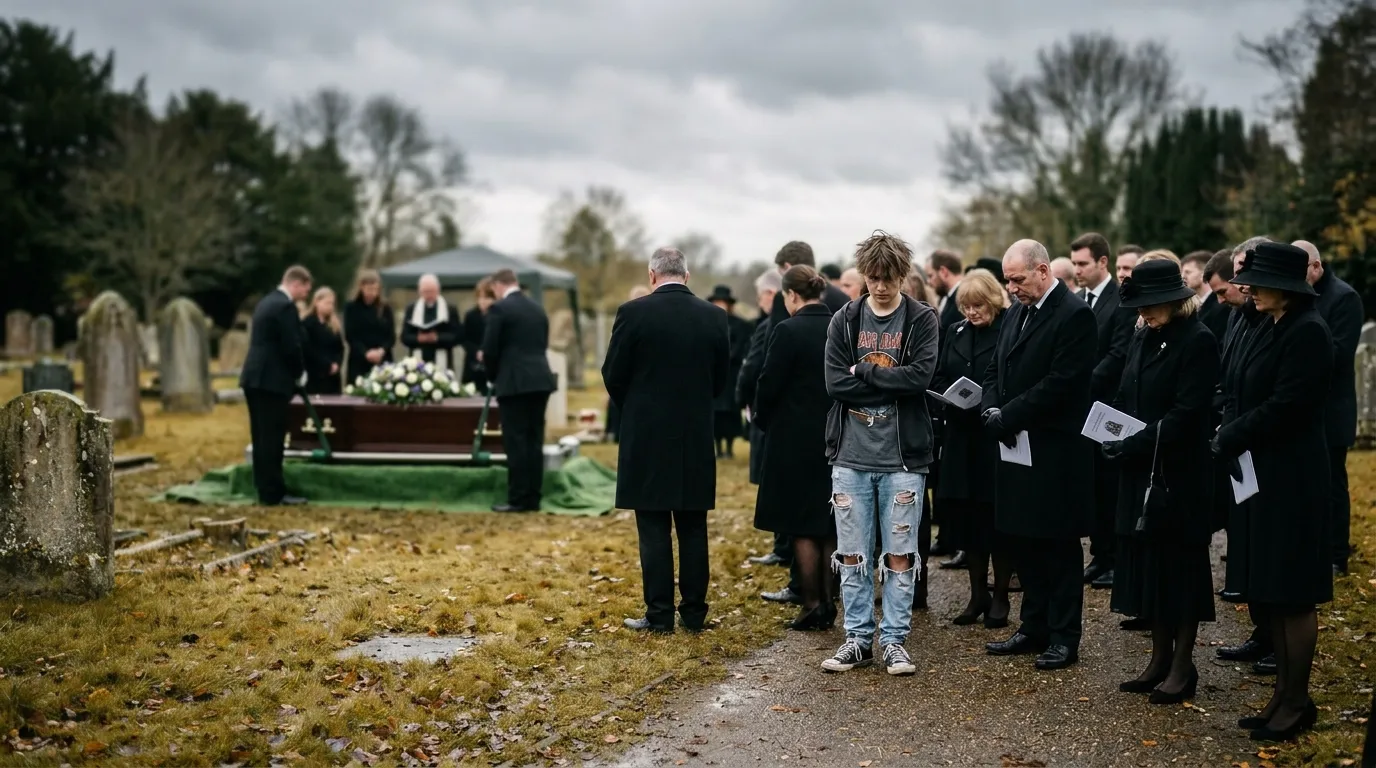
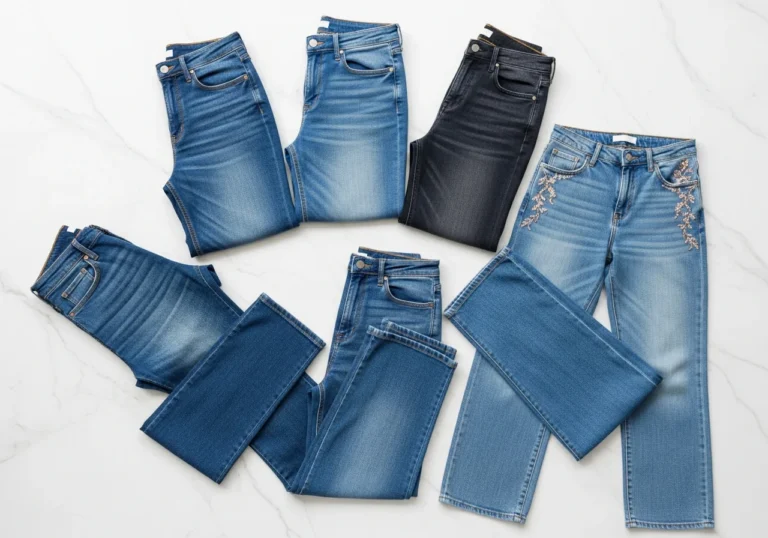
Jeans, t-shirts, shorts, sweatshirts, and hoodies are casual clothing. They belong in everyday life, not at a funeral service. Wearing them to a funeral communicates, whether intentionally or not, that you did not feel the occasion warranted the effort of dressing appropriately. Even if your relationship with the deceased was informal or your personal style leans casual, a funeral is a formal social obligation and the clothing you choose should reflect that.
Jeans in particular occupy a complicated middle ground in this conversation. Some people argue that a dark, well-fitted pair of black jeans paired with a blazer and a collared shirt is acceptable in certain informal settings. That can be a gray area. However, ripped jeans, light-wash denim, distressed denim, or jeans worn with a graphic t-shirt are never acceptable. Similarly, shorts of any kind are not appropriate for a funeral, regardless of how hot the weather is.
T-shirts, especially those with graphics, logos, slogans, or promotional text, send a casual and often jarring message at a funeral. A plain dark t-shirt under a blazer might be forgiven in the most relaxed settings, but it is still not the ideal choice. Athletic wear such as sweatpants, track jackets, yoga pants, and hoodies have no place at a funeral under any circumstances. As etiquette experts consistently emphasize, activewear is at the very top of the list of what to avoid.
What to Wear Instead
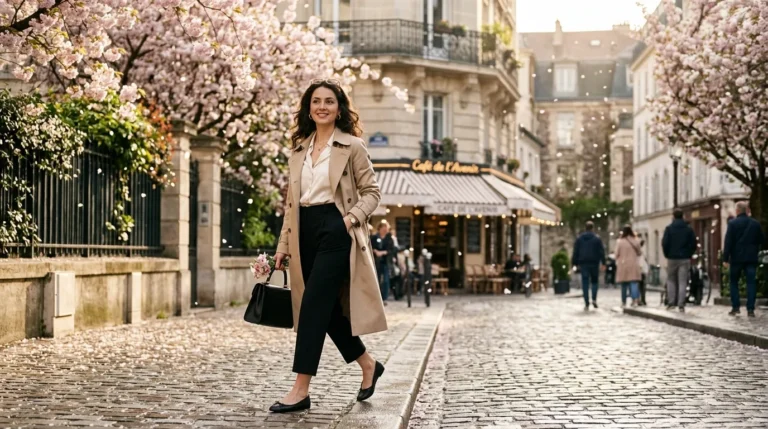
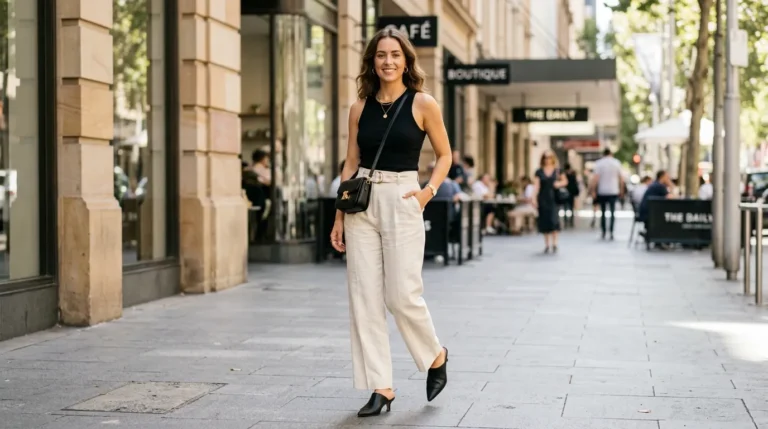
Men should aim for a dark suit with a collared dress shirt and a conservative tie, or at minimum dark dress trousers with a blazer and a button-down shirt. Women can choose a modest knee-length dress, a tailored pantsuit, or dark dress trousers paired with a conservative blouse or sweater. The standard to aim for is business formal or business conservative.To see more women funeral outfit ideas do visit Fits By Launa.
3. Revealing or Body-Conscious Clothing
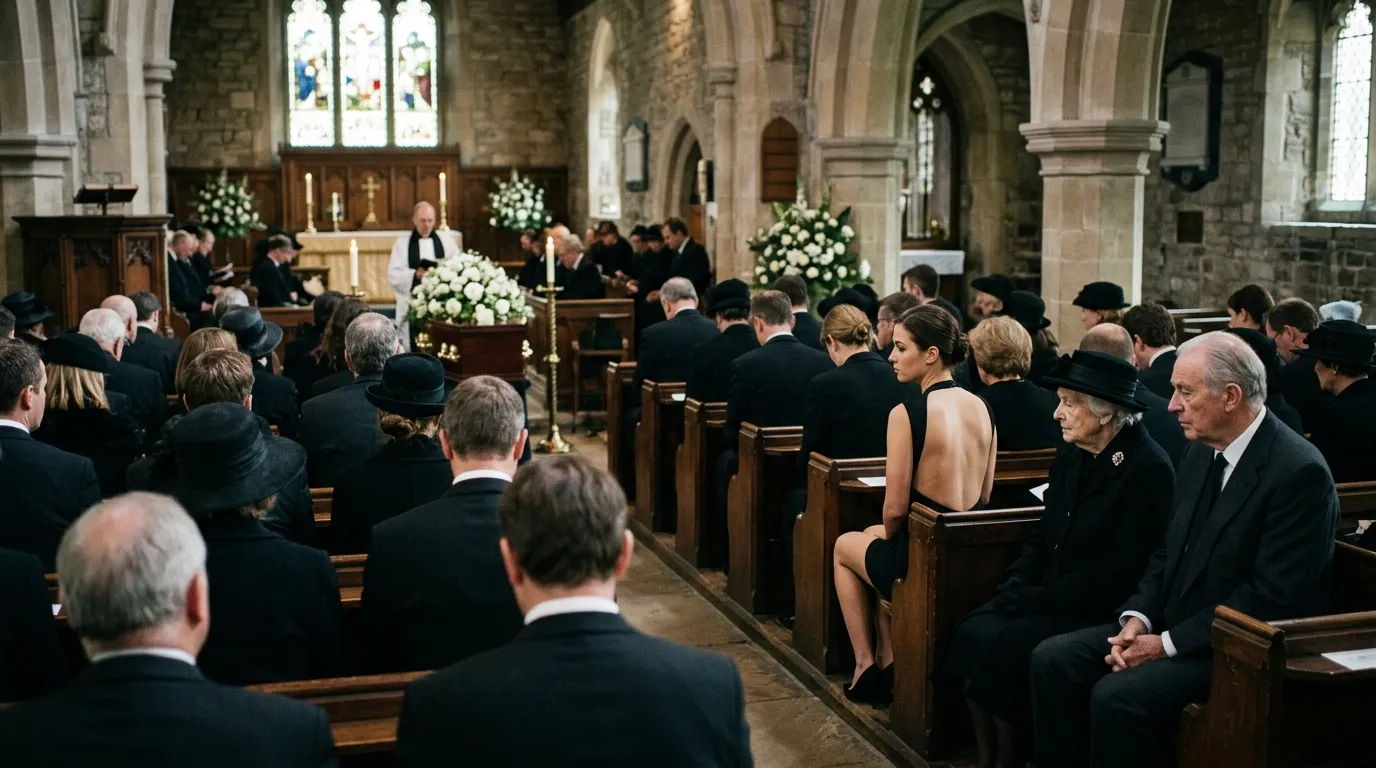
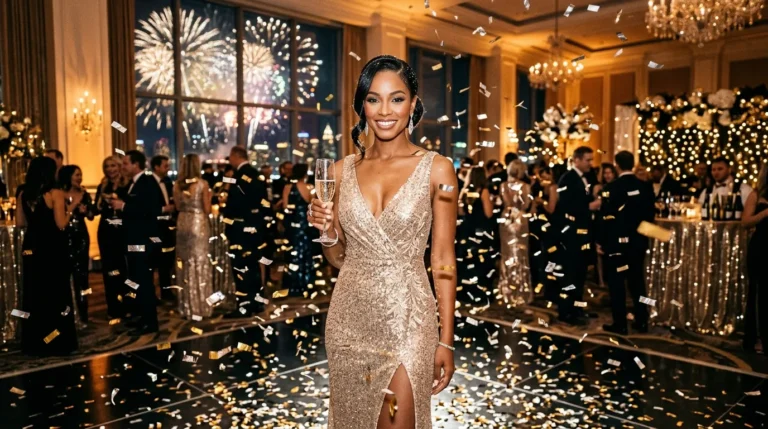
A funeral is not an occasion to showcase your figure. Low-cut tops, backless dresses, mini-skirts, crop tops, form-fitting bodycon dresses, and clothing with deep side slits are disrespectful choices for a funeral regardless of how well they fit or how stylish they may look in another context. Revealing clothing draws attention to the body in a way that feels out of sync with the purpose of a funeral service, which is mourning and remembrance.
This applies to both men and women. Very tight-fitting clothing that leaves little to the imagination, overly short hemlines, and anything that exposes significant skin is inappropriate. In many funeral settings, especially those held in houses of worship, revealing clothing may also violate the dress code requirements of the venue itself.
The reasoning behind this guideline is not about shame or body image. It is about context. What is perfectly acceptable in a social setting becomes disrespectful at a ceremony centered on grief. When you dress modestly for a funeral, you are signaling that you understand the difference between social occasions and sacred or solemn ones.
What to Wear Instead
Women should choose necklines that are conservative, hemlines at or below the knee, and sleeves that provide adequate coverage. If a sleeveless dress is the only appropriate option, pair it with a cardigan, blazer, or shawl. Men should ensure that their shirts are fully buttoned and that their trousers are well-fitted without being overly tight.
4. Inappropriate Footwear That Looks Out of Place
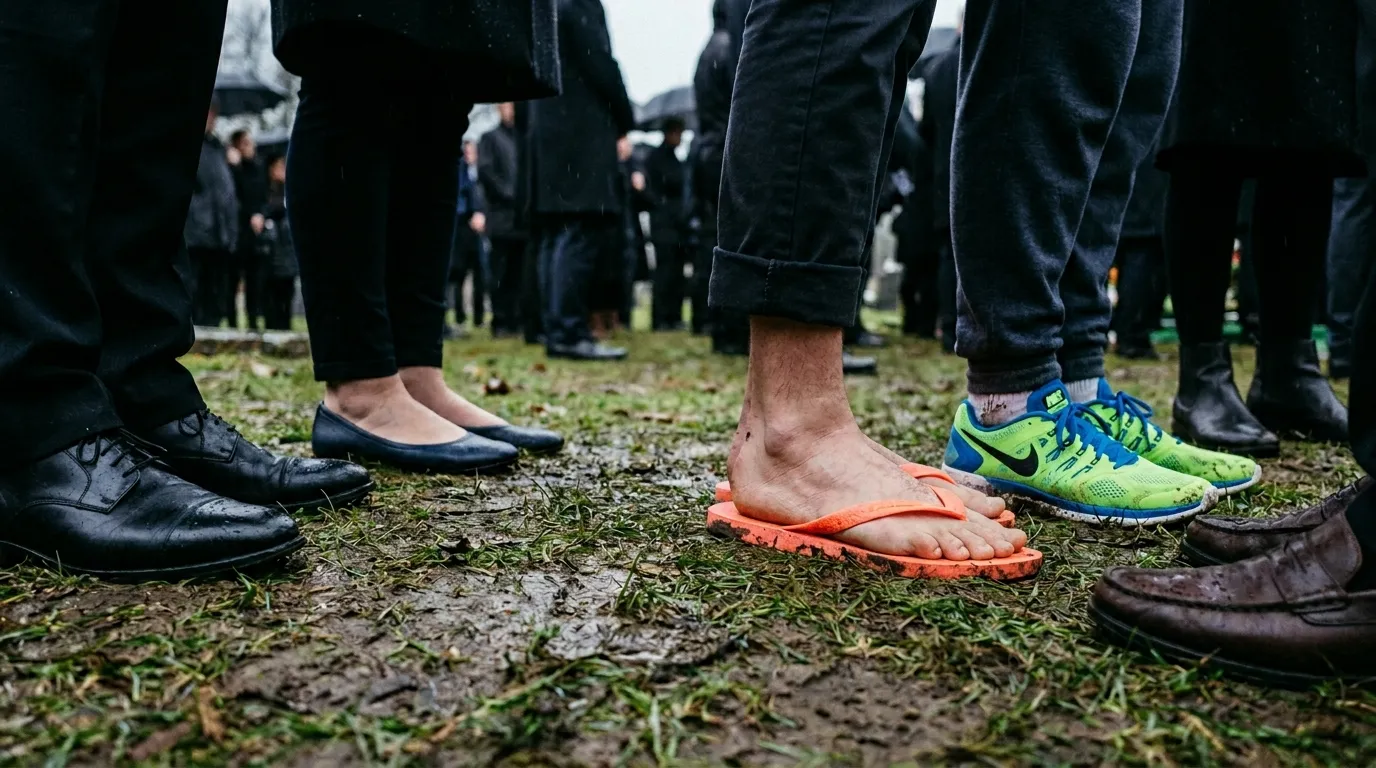
Footwear is one of the most overlooked aspects of funeral attire, yet it communicates just as much as the clothing itself. Flip-flops, sandals, athletic sneakers, canvas slip-ons, and brightly colored shoes are all disrespectful choices for a funeral. As one etiquette expert memorably put it, showing up in sneakers says, “I tossed something on to come here and I’m getting ready to leave.”
Flip-flops in particular are the most universally inappropriate choice. They are vacation footwear and their inherent casualness is at odds with the gravity of a funeral. Brightly colored athletic shoes, platform sneakers, and fashionable but clearly casual footwear send a similar message. Even if the shoes themselves are expensive or trendy, casual is casual, and a funeral demands more.
There is also a practical consideration. Funerals often move between indoor venues and outdoor gravesides, and the terrain at a burial site can include grass, gravel, or uneven ground. Shoes that are appropriate for a funeral should also be practical enough to navigate these surfaces without incident.
What to Wear Instead
Men should wear dark, polished dress shoes, ideally in black or dark brown leather. Women should choose closed-toe shoes in dark neutral shades. Low to moderate heels are appropriate, though very high stilettos can be impractical at outdoor gravesites. Conservative flats or low block heels are a safe and elegant choice.
5. Loud Patterns, Sequins, and Flashy Accessories
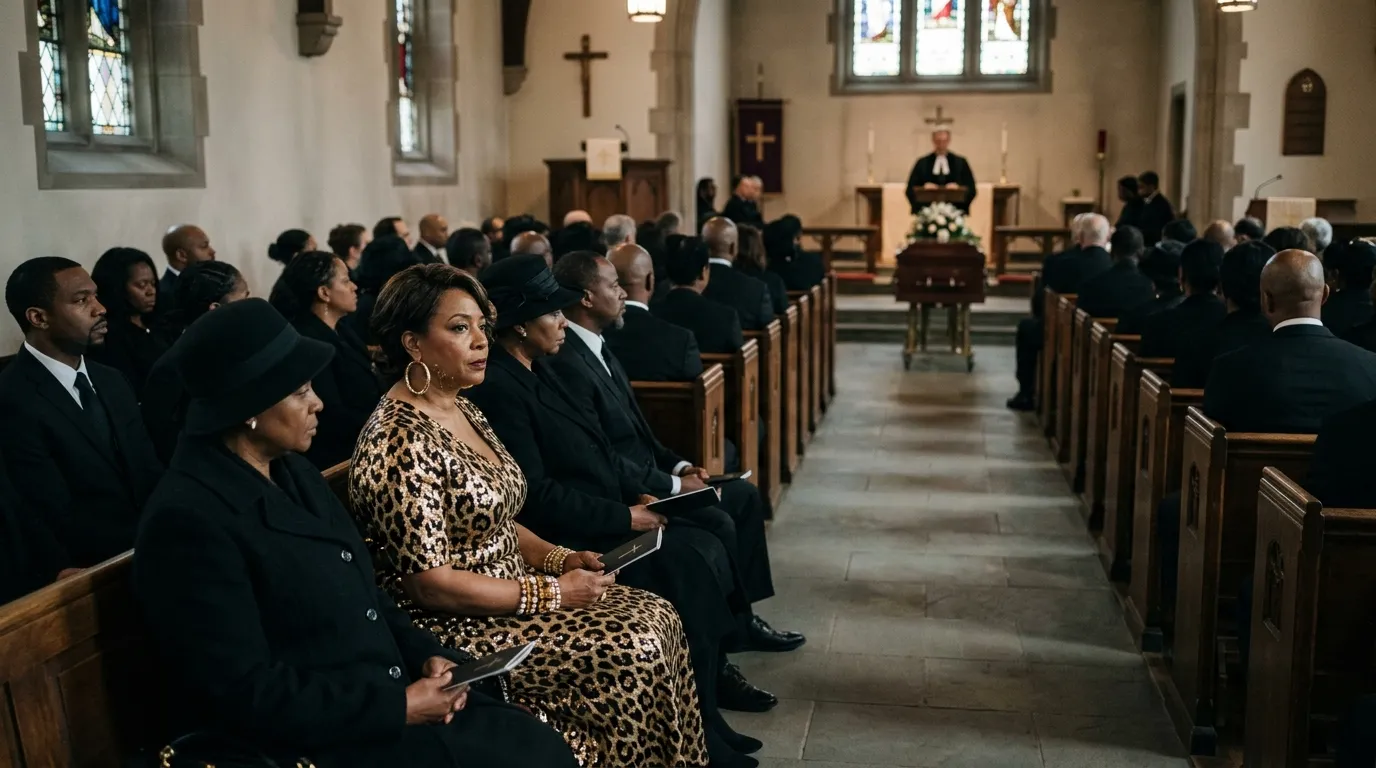
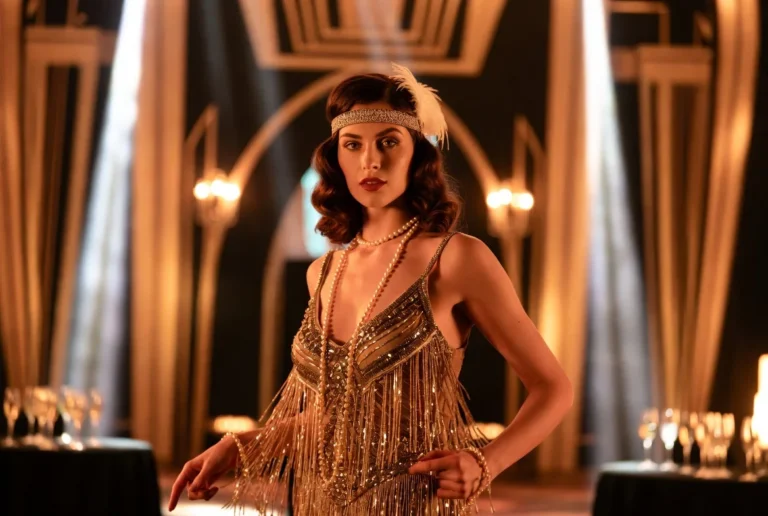
Clothing covered in bold animal prints, large floral patterns, graphic logos, or busy geometric designs is out of place at a funeral. Similarly, sequined fabrics, metallic finishes, heavily embellished garments, and anything designed to catch light and draw the eye are disrespectful choices. These are party clothes, and wearing them to a funeral is a form of tonal mismatch that grieving families notice even if they say nothing.
Accessories also fall under this guideline. Oversized statement jewelry, jangling bangles, dramatically large hats that block sightlines, and accessories that make noise or flash under lighting all fall into the category of disrespectful choices at a funeral. The same applies to novelty items, costume jewelry that leans theatrical, and accessories with slogans or graphic imagery.
Strong perfume or cologne is another frequently overlooked area. Funerals are held in enclosed spaces, and many attendees may be emotionally sensitive, physically unwell, or simply overwhelmed by the day. An overpowering scent in such a setting is distracting and can cause physical discomfort for others around you.
What to Wear Instead
Choose solid, dark colors whenever possible. If you do wear a pattern, make it subtle, such as a fine pinstripe, a quiet houndstooth, or a very understated plaid. Accessories should be minimal and understated. A simple watch, small stud earrings, or a modest necklace is appropriate. Apply perfume or cologne sparingly, or skip it entirely.To see more ideas do visit Funeral.
6. Unkempt, Damaged, or Visibly Dirty Clothing
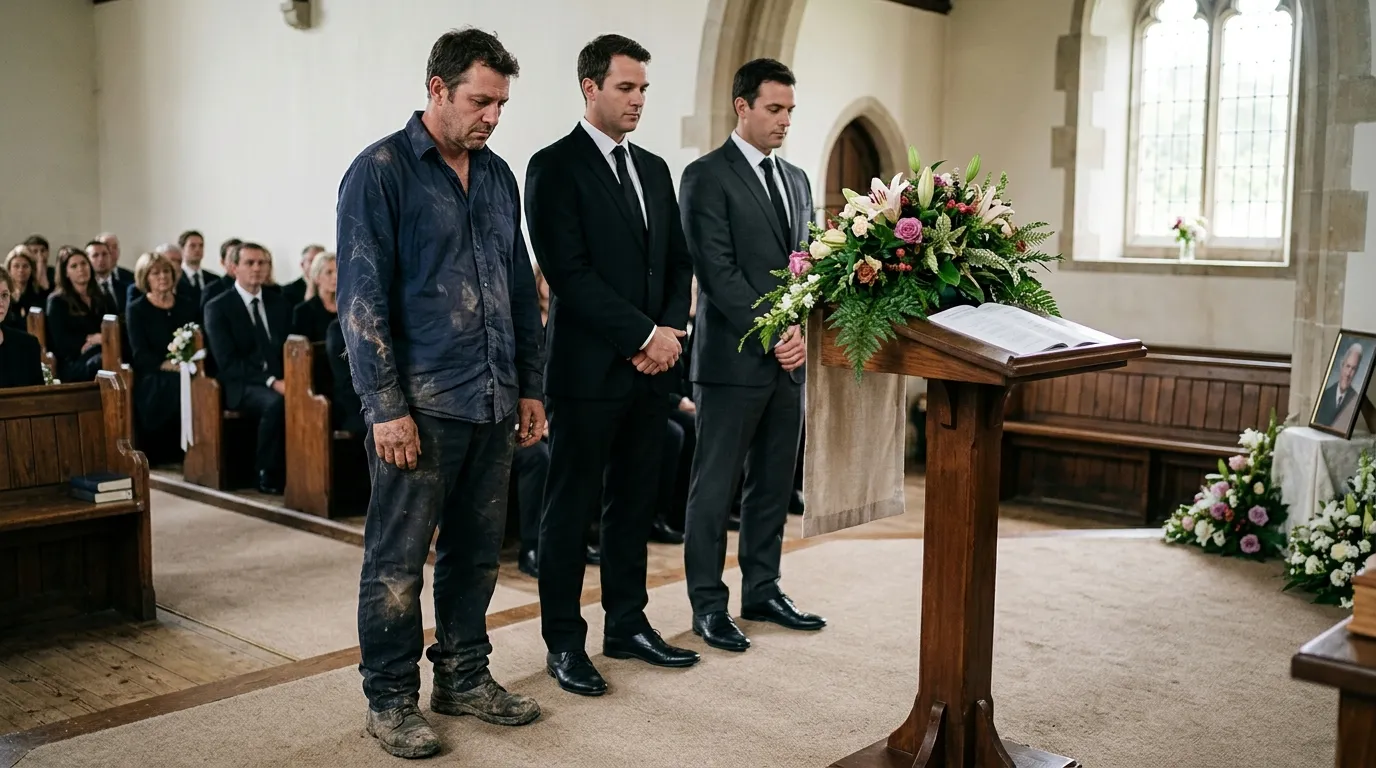
This point is separate from style, but it is equally important. Showing up to a funeral in clothing that is wrinkled, stained, visibly worn, ripped, or covered in pet hair signals carelessness. Even if the items you choose are technically appropriate in terms of color and formality, their condition matters. A wrinkled shirt or scuffed shoes can undercut an otherwise acceptable outfit.
Taking the time to press your clothes, polish your shoes, and ensure your outfit is clean before a funeral is a basic expression of respect. It says that you understood the significance of the occasion enough to prepare properly. For many grieving families, these small gestures of care and effort are noticed and appreciated far more than people realize.
Why Funeral Attire Matters More Than You Think
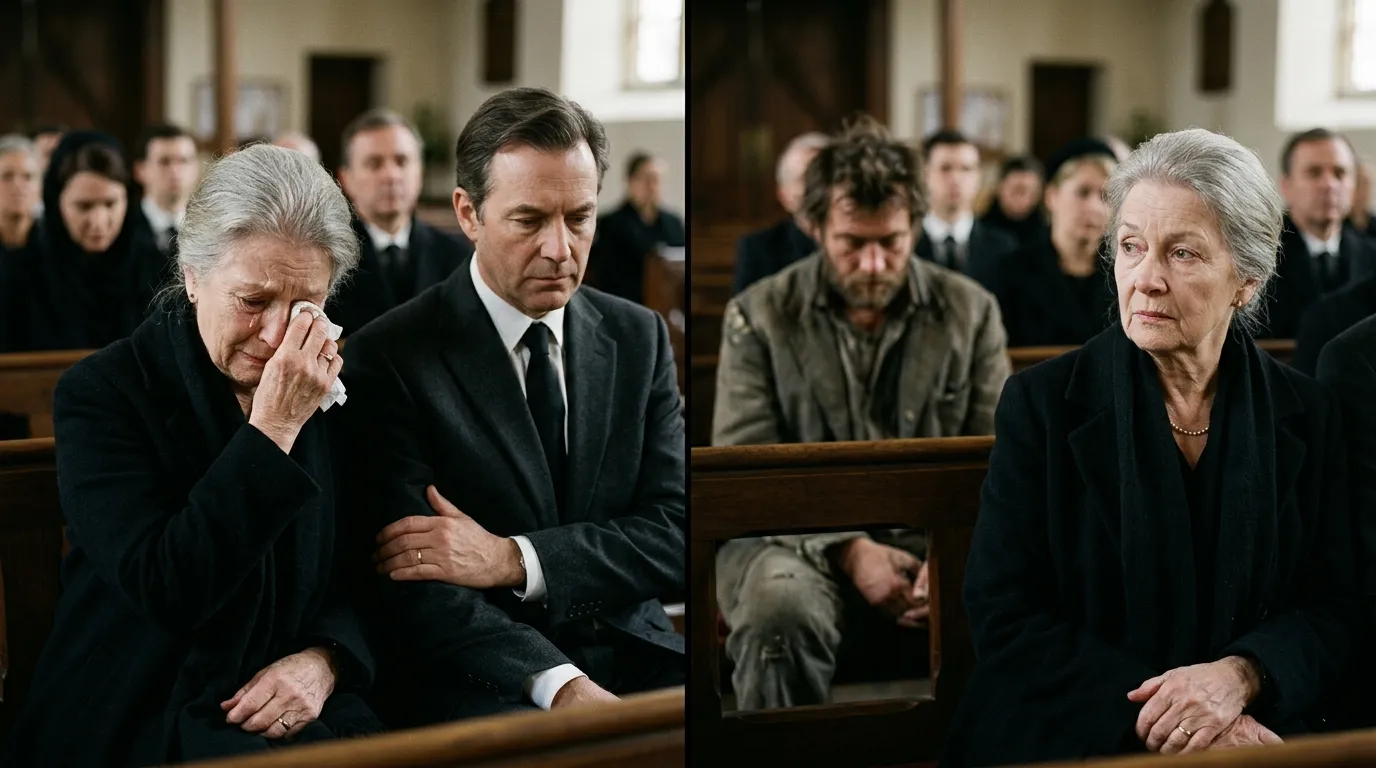
It is tempting to dismiss funeral attire as a superficial concern, particularly at a time when emotions run so deep. But clothing is a form of nonverbal communication, and in a setting as emotionally raw as a funeral, every signal matters. When you dress thoughtfully, you give the grieving family one less thing to feel discomfort about. You allow the focus to remain where it belongs, on the person who has passed and the people who loved them.
Funeral attire is not about following arbitrary rules for the sake of tradition. It is about demonstrating, through your appearance, that you understand what the moment calls for. It is about showing up with the kind of care and consideration that the grieving family deserves.
The bottom line is straightforward. When in doubt, dress conservatively. Choose darker, muted tones. Wear clothing that is clean, well-fitted, and modest. And if the family has communicated any specific wishes regarding attire, honor those wishes above everything else. That single act of following the family’s preference is itself the clearest possible demonstration of respect.
Conclusion
Funerals ask something of us that many other social occasions do not. They ask us to set aside personal expression, comfort-seeking, and convenience in favor of something larger, the shared act of mourning and remembrance. What you wear is one of the most immediate ways you participate in that act, long before you say a word or take a seat.
The disrespectful things to wear to a funeral are those that prioritize personal style over collective solemnity, that draw attention inward rather than outward, and that signal a lack of awareness about the gravity of the moment. Bright colors, casual clothing, revealing outfits, inappropriate footwear, loud patterns, and unkempt garments all fall into this category, not because of rigid fashion rules, but because of the simple human truth that how we present ourselves communicates something to those around us.
When you take the time to dress with care for a funeral, you are telling the grieving family, without a single spoken word, that you took their loss seriously enough to show up properly. That is a small gesture with a meaningful weight behind it.
Frequently Asked Questions
Is it disrespectful to wear dark blue or dark gray instead of black to a funeral?
No, it is not disrespectful. Dark navy and charcoal gray are widely accepted and appropriate alternatives to black at most funeral services. The key is that the color remains subdued and respectful rather than bright or festive.
Can I wear jeans to a funeral if they are black and paired with a blazer?
In the most informal celebration of life settings, this combination may be acceptable, but it is generally better to wear proper dress trousers if at all possible. Black jeans are still casual wear, and the safest choice is always to dress slightly more formally than you think is necessary.
Is white acceptable to wear to a funeral?
In Western funerals, white is typically avoided because it can appear festive or bridal. However, in many Asian cultural traditions, white is actually the color of mourning and is entirely appropriate. Always consider the cultural background of the service before making this decision.
What should children wear to a funeral?
Children should be dressed in subdued, dark, or neutral tones, similar to adult guidance. Dark trousers or dresses, plain tops, and clean, closed-toe shoes are appropriate. Avoid bright patterns, cartoon graphics, or athletic wear for children at funeral services.
What if I genuinely have nothing appropriate to wear to a funeral?
If your wardrobe does not include appropriate funeral attire, look for affordable options at clothing stores or borrow from someone whose size is close to yours. Spending a modest amount to dress respectfully for a funeral is always worthwhile. What matters most is that you make the effort, because the effort itself is what communicates respect. Srbija Invest