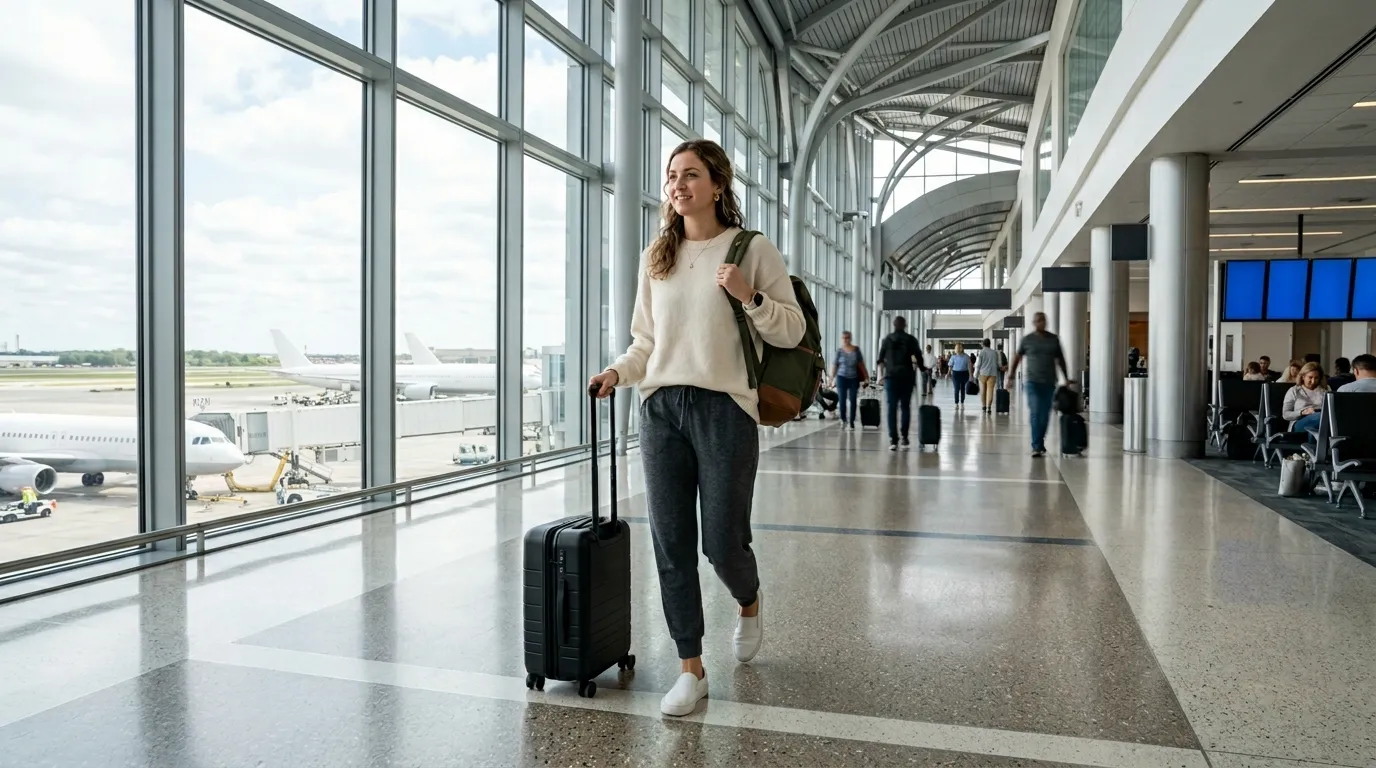
The Best Outfits To Wear On A Plane
Introduction
There is a particular kind of misery that comes from being trapped in a middle seat for six hours wearing the wrong outfit. The waistband cuts in. The fabric refuses to breathe. The shoes that looked so sharp at the departure gate have become instruments of slow torture somewhere over the Atlantic. Anyone who travels with any regularity knows this feeling well, and anyone planning an upcoming trip would do well to avoid it entirely.
Getting dressed for a flight is genuinely different from dressing for any other occasion. You are preparing for an environment that shifts from cold to stuffy without warning, where you will be seated for hours, navigating security checkpoints, hauling luggage through terminals, and possibly stepping off the plane directly into a meeting, a dinner, or a hotel lobby. The outfit you choose must do a remarkable amount of work.
This guide covers the best outfits to wear on a plane, broken down by fabric choices, specific outfit combinations, footwear, what to avoid, and how to dress for different types of flights. Whether you are taking a quick domestic hop or a long-haul international journey, the right clothing can make the difference between arriving refreshed and arriving exhausted.
Why Your Airplane Outfit Matters More Than You Think
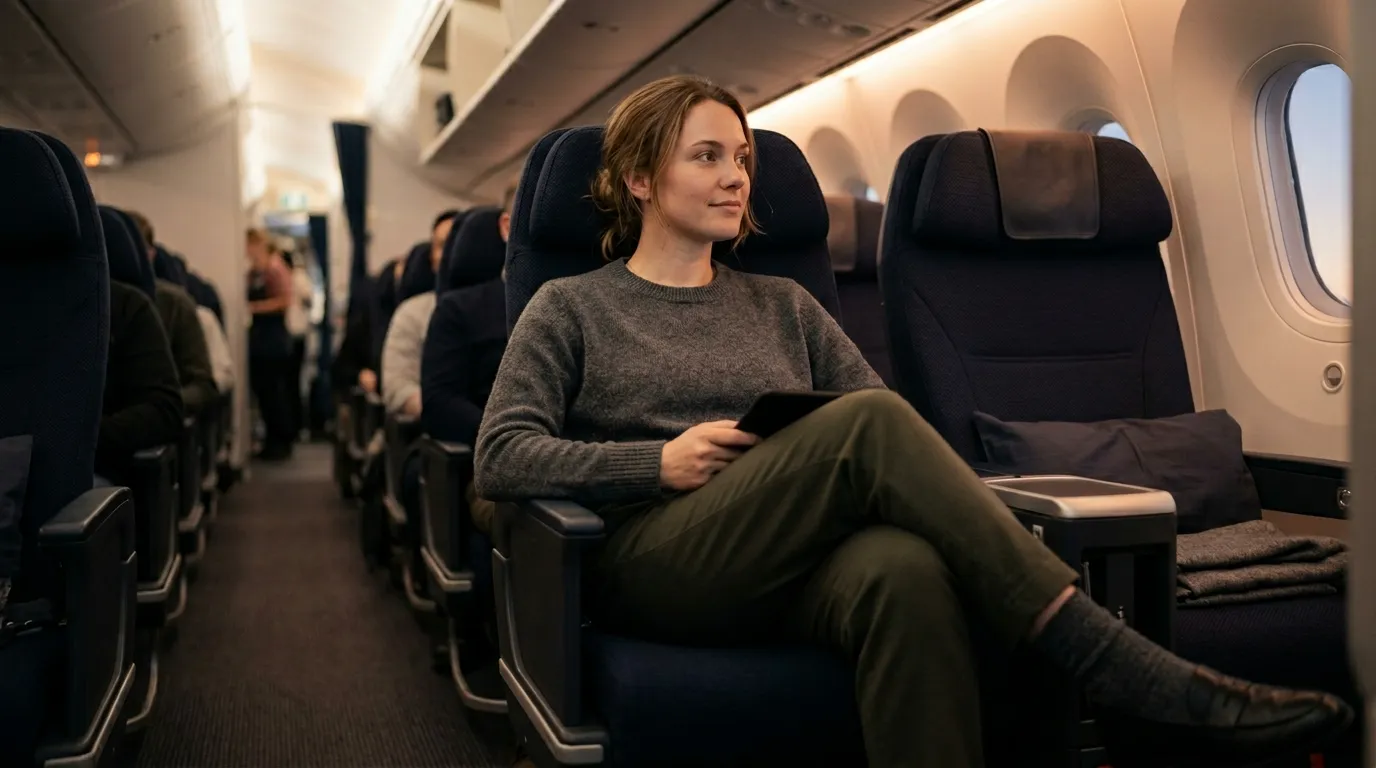
Most travelers underestimate how significantly clothing affects the flying experience. Airplane cabins are pressurized environments with low humidity, recycled air, and temperatures that fluctuate based on your seat location, the time of day, and how aggressively the airline manages its climate system. Your circulation slows when you sit for long periods, your body temperature drops unpredictably, and the reduced oxygen levels at cruising altitude leave most people more fatigued than they would be on the ground.
Clothing that restricts circulation, holds heat poorly, or simply feels uncomfortable during extended wear will amplify every one of these discomforts. On the other hand, clothing chosen with intention, soft, layered, breathable, and practical, can transform a long flight into something genuinely manageable. Your outfit is not a vanity decision when you are traveling. It is a practical choice with real consequences for how you feel upon arrival.
The 7 Best Outfit Combinations To Wear On A Plane
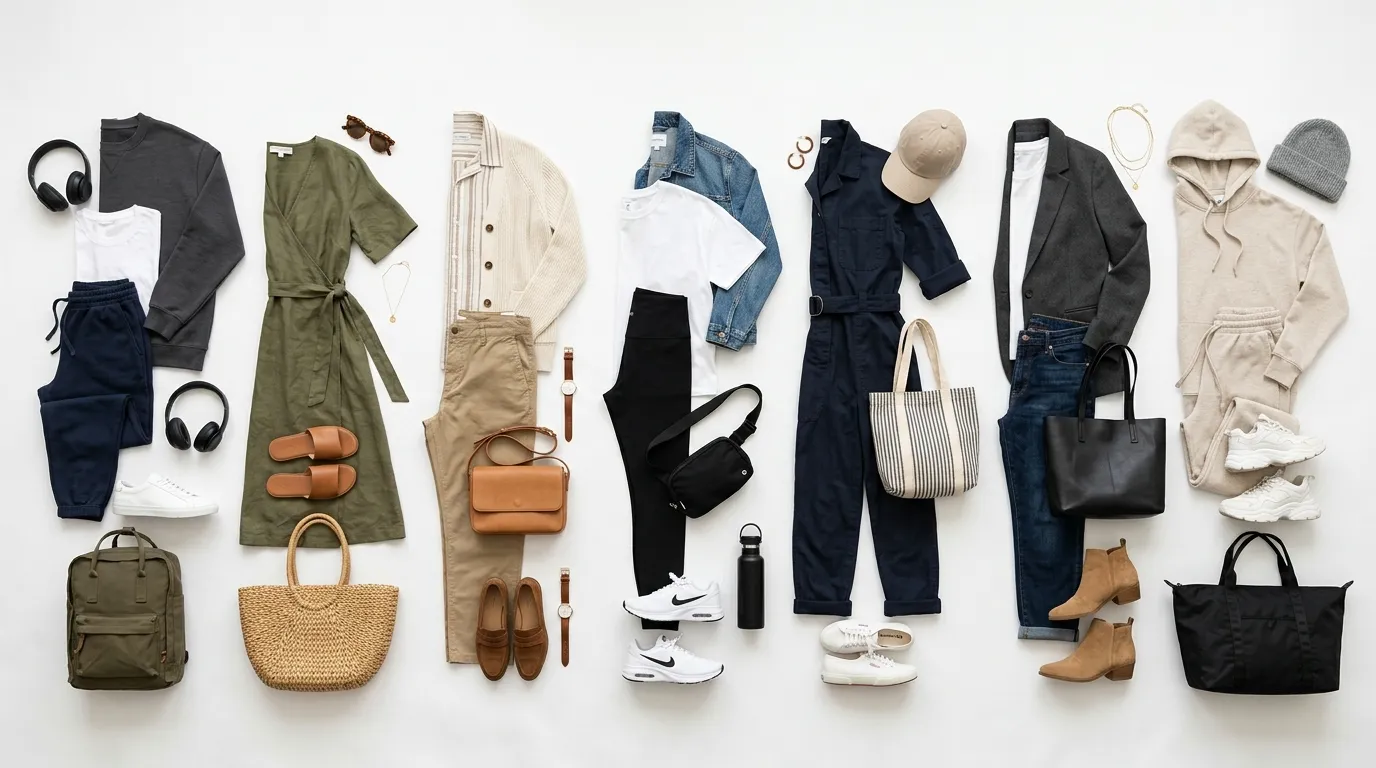
Below are seven proven outfit combinations that work across different travel scenarios, body types, and personal styles. Each one prioritizes comfort without abandoning the kind of put-together appearance that makes the rest of your travel experience smoother.
1. The Classic Athleisure Look
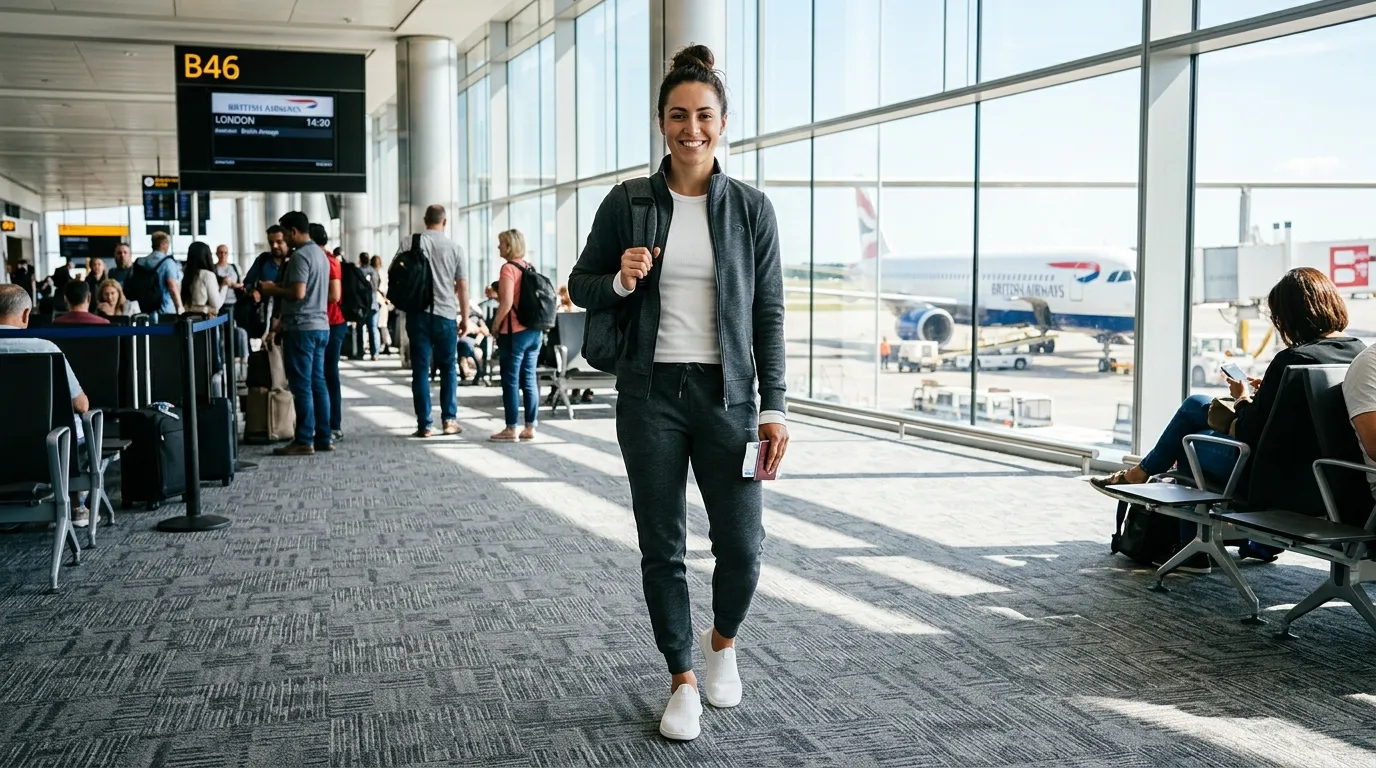
A well-fitted pair of high-waisted joggers or slim-cut sweatpants paired with a soft fitted long-sleeve top and a zip-up hoodie or track jacket is arguably the most reliable airplane outfit in existence.To see some ideas about SweatPants do visit Fits By Launa.
The critical word here is well-fitted. Athleisure that runs too oversized can look sloppy and feel cumbersome in a tight seat, while pieces that fit properly move with you and look intentional. Add a pair of clean, neutral-colored slip-on sneakers and you have an outfit that performs at 35,000 feet and reads as casual-polished the moment you land.
2. The Elevated Casual Outfit
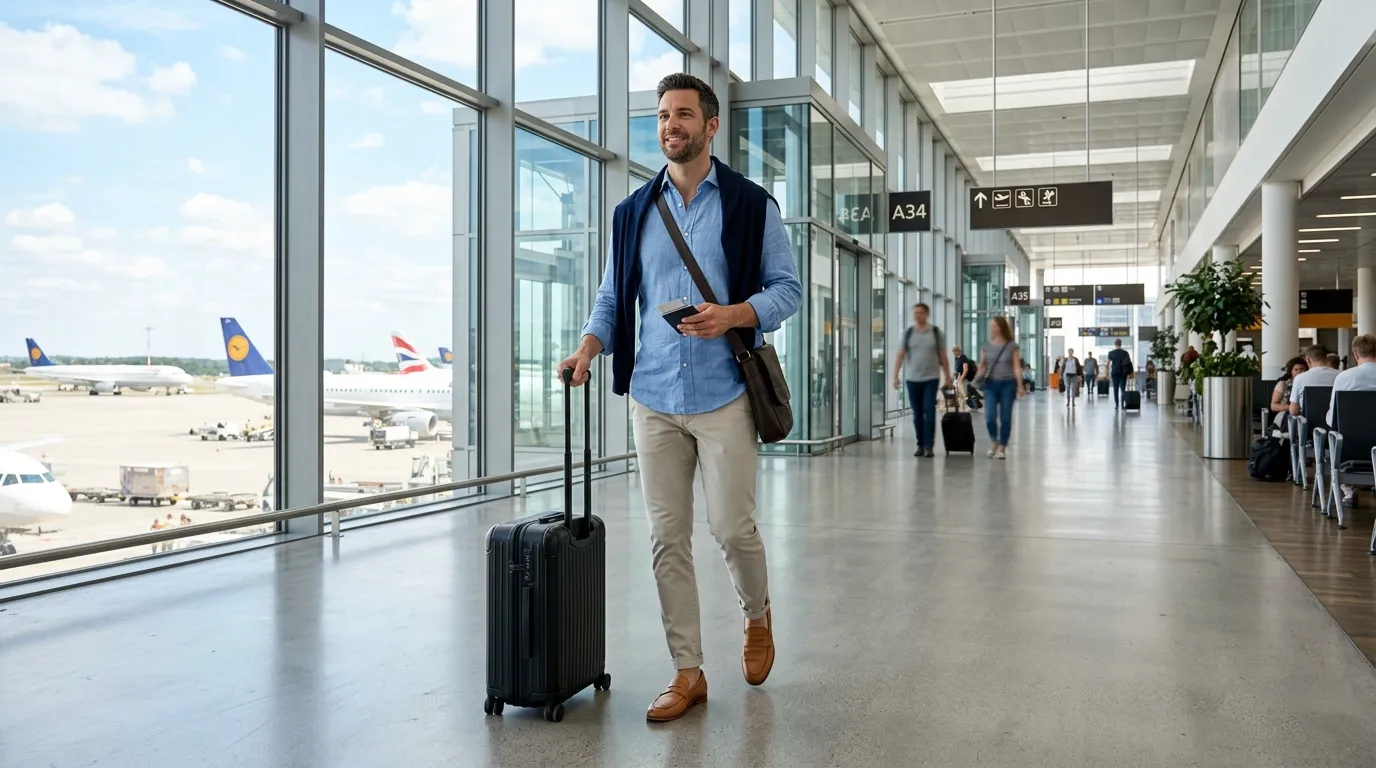
For travelers who want to arrive looking reasonably polished, the elevated casual combination works exceptionally well. This typically means a pair of straight-leg or tapered chinos in a neutral color like navy, olive, or stone, worn with a loose linen or cotton button-down shirt left untucked. A lightweight merino wool cardigan or structured knit sweater that can be removed and draped easily, finished with leather loafers or clean minimalist sneakers, rounds out the look. This outfit can take you directly from a morning flight into a business lunch without any need to change.
3. The Leggings and Oversized Sweater Combination
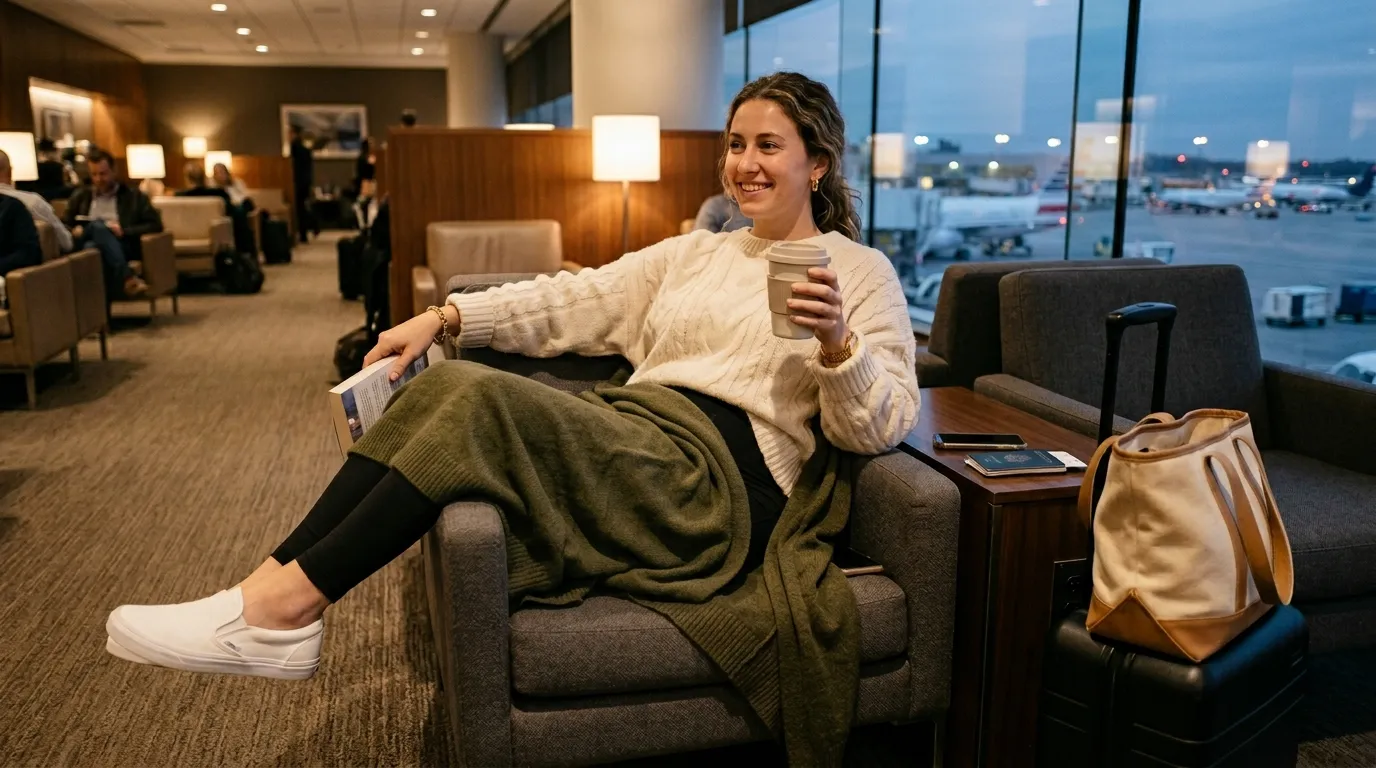
This is the go-to outfit for countless frequent travelers, and for good reason. A pair of high-quality compression leggings, particularly those with a wide waistband that does not dig in during long periods of sitting, worn with an oversized cashmere or cotton sweater, provides maximum comfort while still looking pulled together. A lightweight longline cardigan or duster layered over the top creates a system that handles temperature swings with ease. Slip-on flats or low-profile sneakers complete the look.
4. The Monochrome Travel Outfit
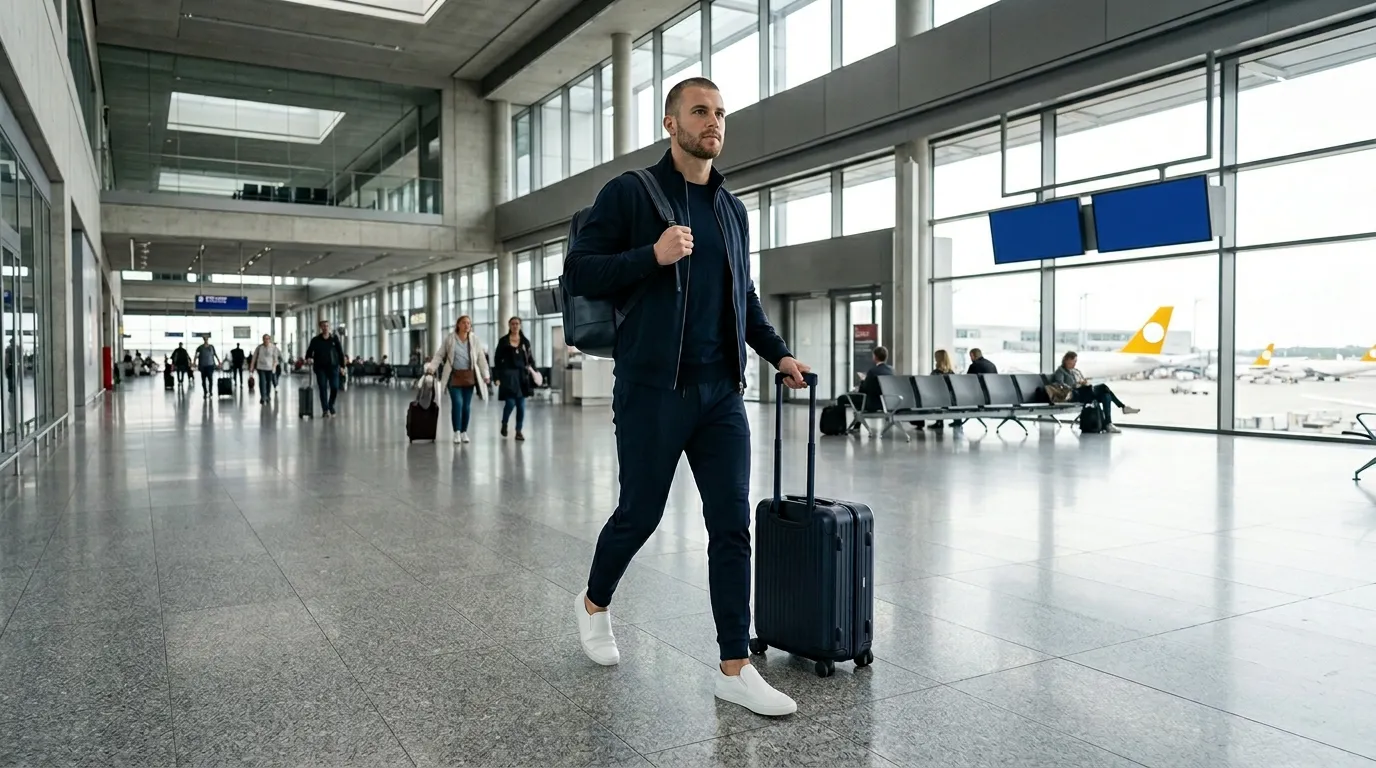
Dressing in a single color or tight tonal palette is one of the simplest ways to look effortlessly stylish without overthinking your airport outfit. A pair of charcoal or navy joggers or casual trousers worn with a matching top and an outer layer in the same color family reads as intentional and sophisticated. Monochrome dressing also has a practical benefit: if anything spills, it is far less visible against a uniform tone. Beige, navy, grey, and black are all excellent palettes for long-haul flights.
5. The Smart Casual Dress or Jumpsuit
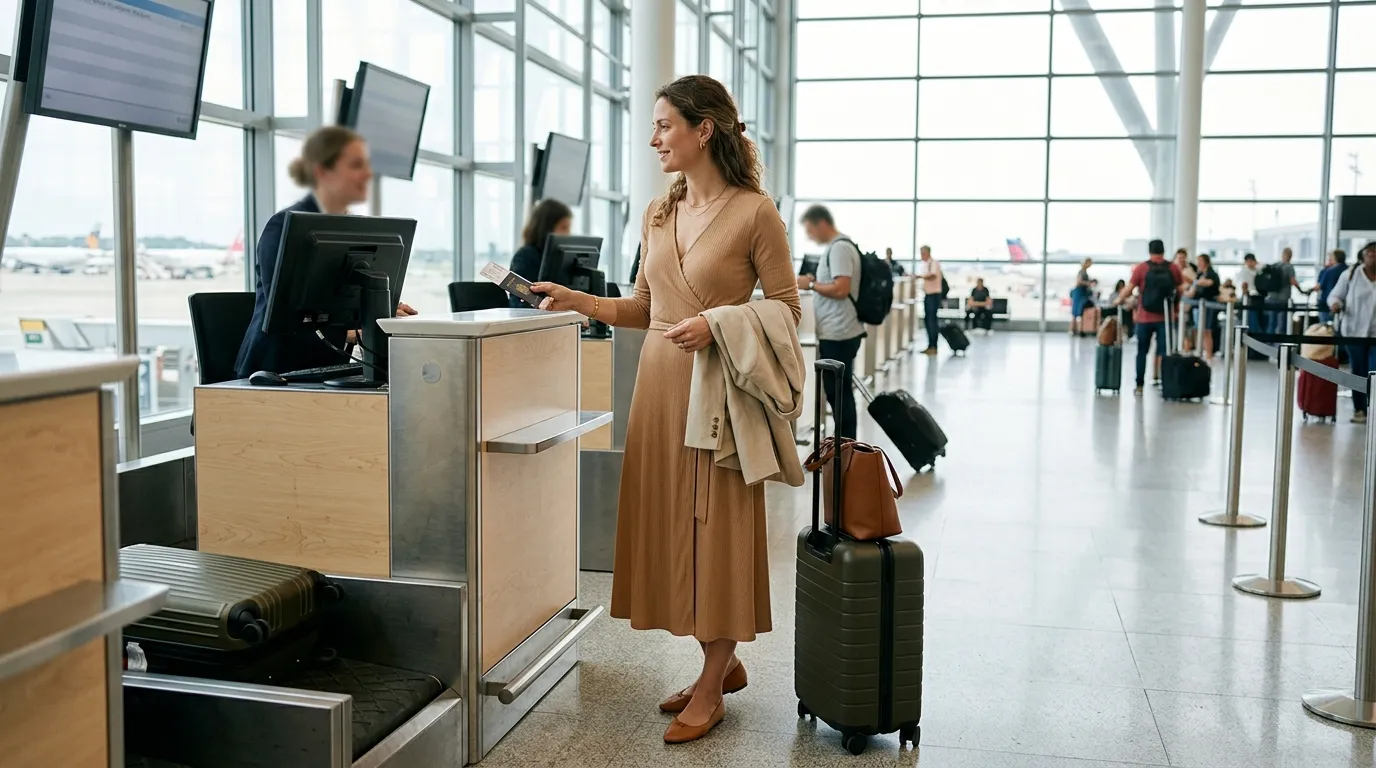
A midi wrap dress or a wide-leg jumpsuit in a soft fabric like jersey, modal, or viscose can be one of the most comfortable options for flying, and one of the most versatile upon arrival. These pieces require no separate top and bottom coordination, feel like wearing almost nothing when made from the right material, and can be dressed up or down with footwear and accessories. The key is choosing a style with stretch or a loose enough cut that hours of sitting never feels restrictive. A lightweight jacket or blazer draped over the top completes the look.
6. The Business Traveler Outfit
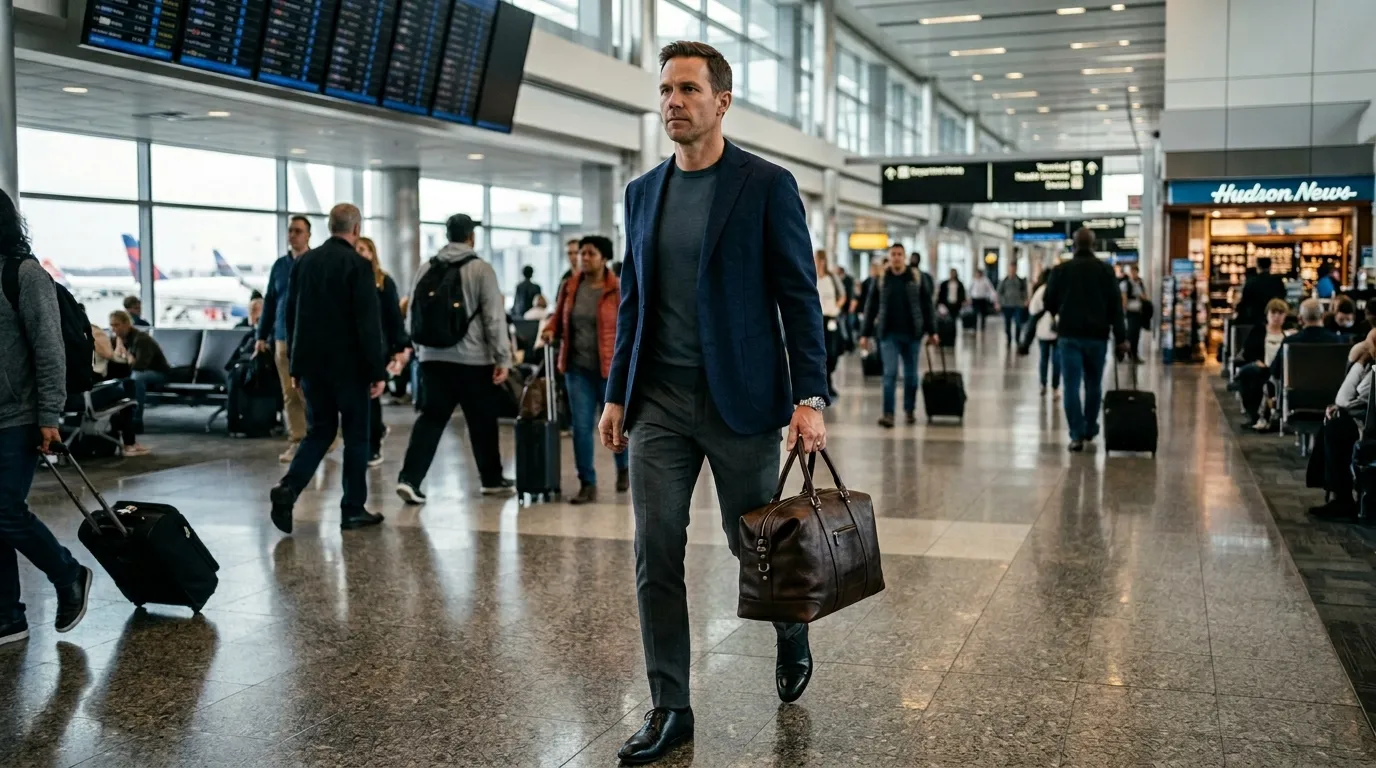
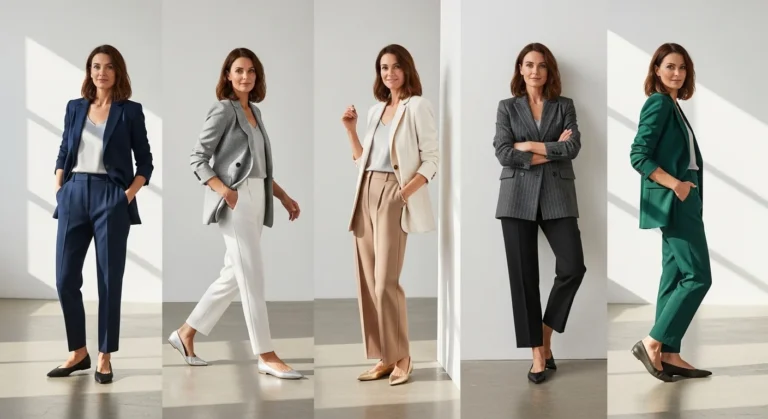
For those flying for work and heading directly into meetings or events, well-cut travel trousers in a wrinkle-resistant fabric paired with a fitted merino wool top and a tailored blazer is the gold standard. Many brands now produce business casual pieces specifically designed for travel, using technical fabrics that look formal but feel soft and flexible. Avoid stiff collared shirts if you plan to sleep on the plane, and opt for stretch-waist trousers rather than those with a rigid waistband. Ankle boots or comfortable leather oxford-style shoes finish the outfit cleanly.
7. The Cozy Long-Haul Outfit
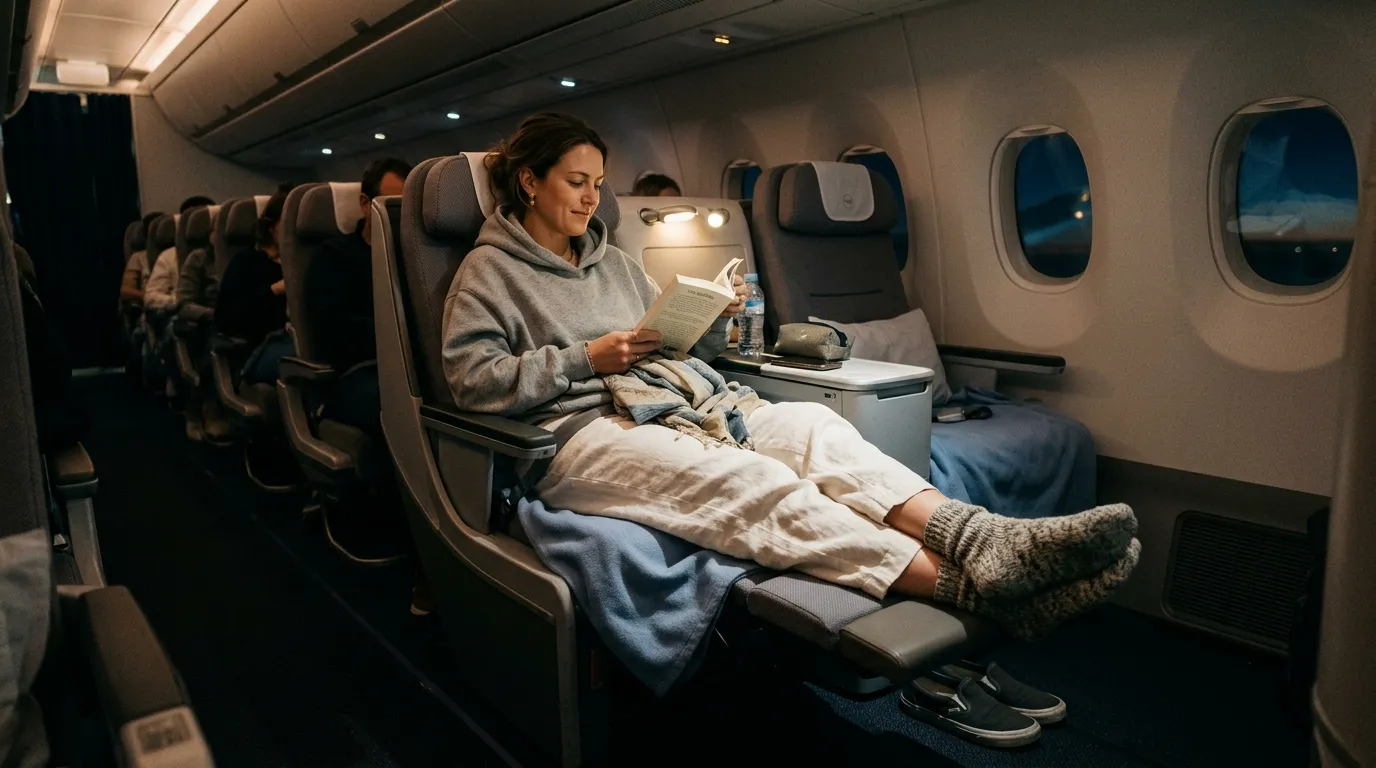
For flights over eight hours, comfort should take absolute priority. A pair of loose linen or soft cotton drawstring trousers, a breathable long-sleeve base layer, and a large oversized hoodie or sweatshirt makes for the ideal long-haul combination. Add a pair of cozy socks to change into once seated, and wear slip-on shoes that come off without effort. Many seasoned long-haul travelers also bring a lightweight scarf that doubles as a blanket, adding warmth without meaningful weight to the overall outfit.
The Best Fabrics To Choose For Flying
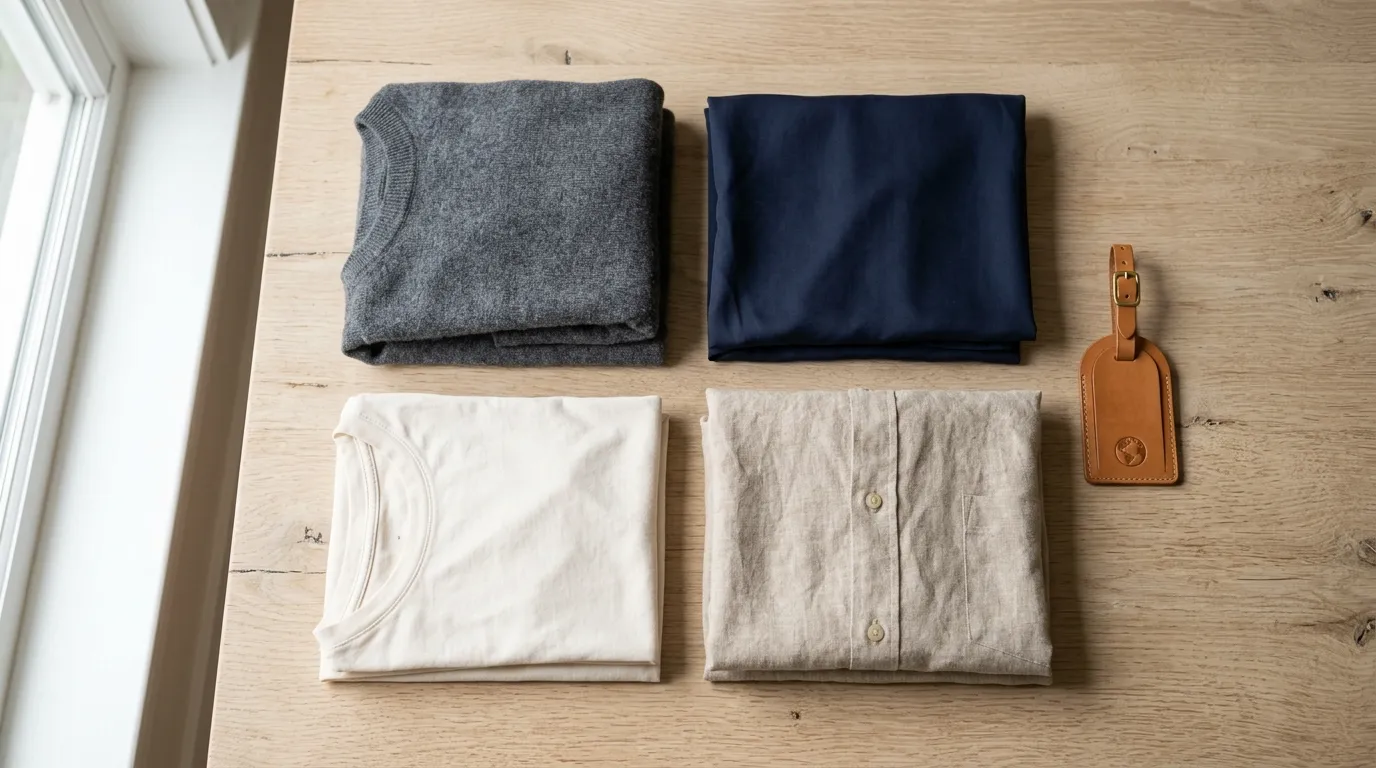
Fabric choice is often more important than the specific garment style when it comes to airplane comfort. The following materials consistently outperform others in the cabin environment.
Merino wool is the single best travel fabric available. It is naturally temperature-regulating, moisture-wicking, odor-resistant, and wrinkle-resistant. A merino base layer or sweater will keep you warm when the cabin is cold and breathe when things turn stuffy. It also looks polished enough for most post-flight situations without requiring any effort.
Cotton and jersey are reliable, widely available, and soft against the skin. Lightweight cotton breathes well but wrinkles easily, so opt for jersey cotton blends or thicker knit cotton pieces that hold their shape better after hours in a seat.
Modal and bamboo fabrics are exceptionally soft and drape beautifully, making them ideal for travel dresses and relaxed tops. They resist odors naturally and feel genuinely luxurious during long periods of wear.
Linen is an excellent warm-weather travel fabric, particularly for short flights or when traveling to warmer destinations. It wrinkles, but those wrinkles tend to look intentional and relaxed rather than disheveled, especially in neutral tones.
Footwear: The Most Overlooked Part of the Airplane Outfit
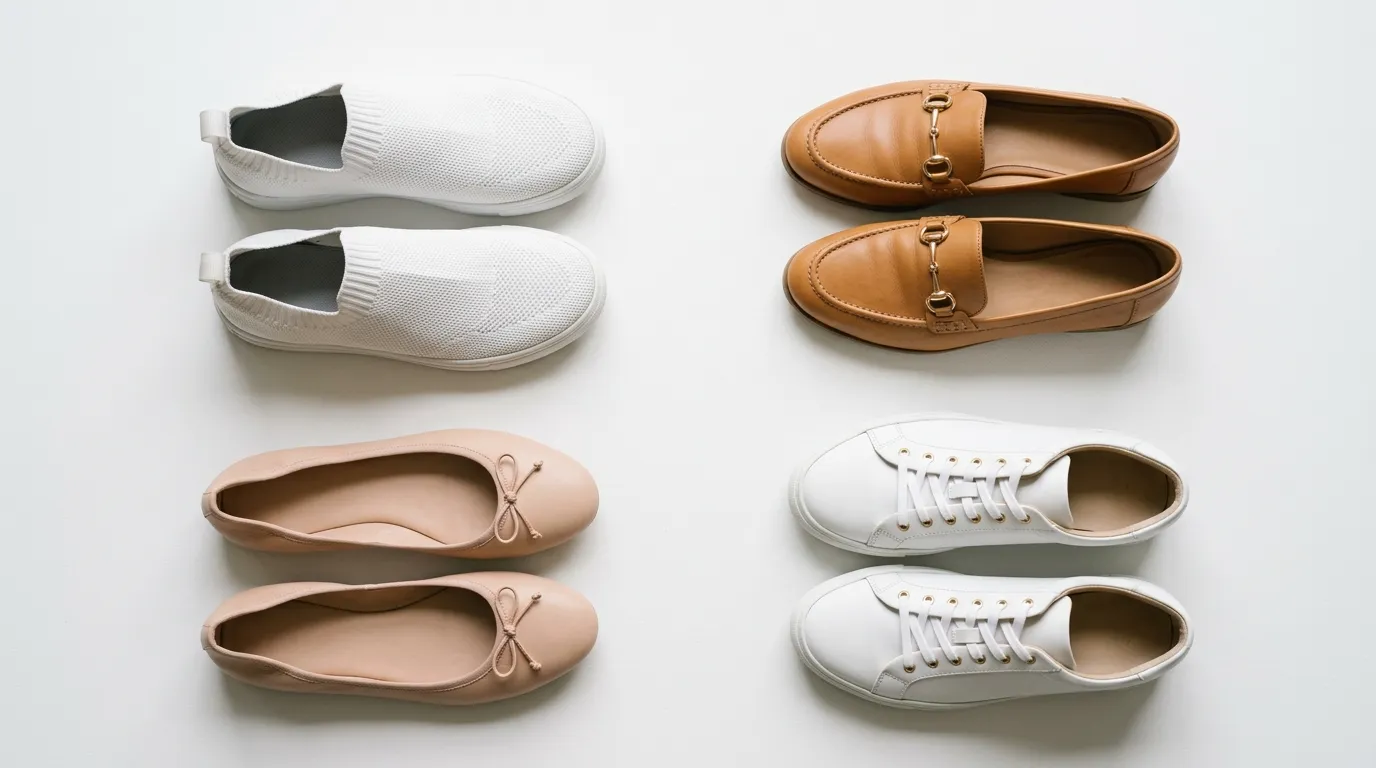
Your footwear choice can make or break the travel experience in ways that extend far beyond style. Feet tend to swell during long flights due to reduced circulation and cabin pressure changes, which means shoes that fit perfectly on the ground may become uncomfortably tight at altitude. The best shoes for flying have some give in the upper, easy slip-on construction, and a supportive but not restrictive fit.
Slip-on sneakers, particularly those with a knit upper and a cushioned sole, are the top choice for most frequent flyers. They pass through security without requiring you to sit down and fumble with laces, they accommodate slight swelling without becoming painful, and they look clean and modern with virtually every casual travel outfit.
Loafers are an excellent alternative for those who prefer a more polished appearance, particularly in leather or suede styles with a comfortable, flexible sole. Avoid high heels, stiff boots that require lacing, and any shoes with excessive metal hardware that will slow you down at security checkpoints.
Layering: The Single Most Important Strategy for Airplane Dressing
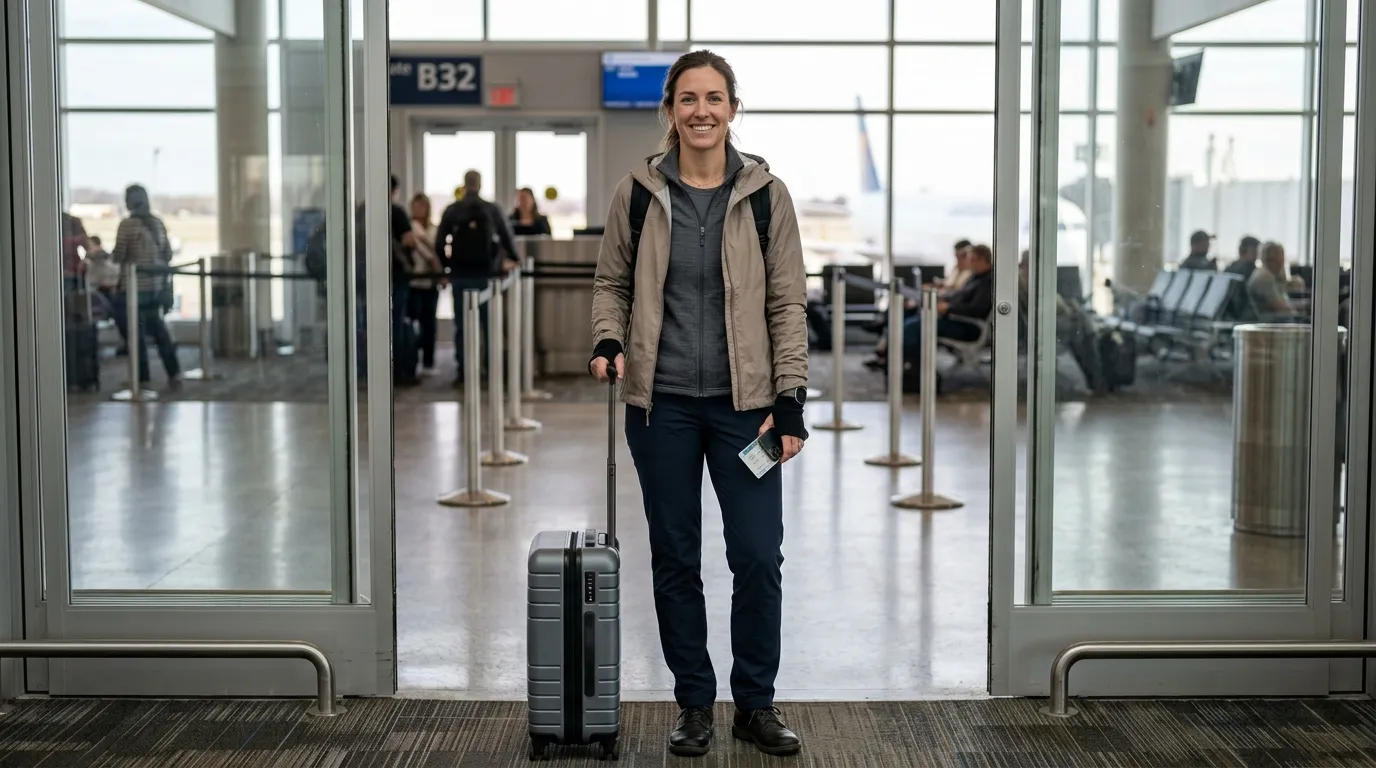
If there is one non-negotiable rule for dressing for a flight, it is this: always layer. Cabin temperatures are unpredictable by nature. The seat near the window may be cold while the aisle stays warm. The first hour of a flight may feel stuffy while the final two hours leave you reaching for a blanket. Layering allows you to respond to these fluctuations without discomfort or frustration.
A simple three-layer system works well for almost every flight. Begin with a breathable base layer, which could be a fitted long-sleeve top or a moisture-wicking T-shirt. Add a mid-layer for warmth, such as a sweater, cardigan, or zip-up hoodie that can be removed and stowed easily under the seat or in the overhead bin. Finish with an outer layer if the weather at your destination requires one, choosing something lightweight and packable like a quilted vest, a softshell jacket, or a classic trench coat that folds into your carry-on without much fuss.
What Not To Wear On A Plane
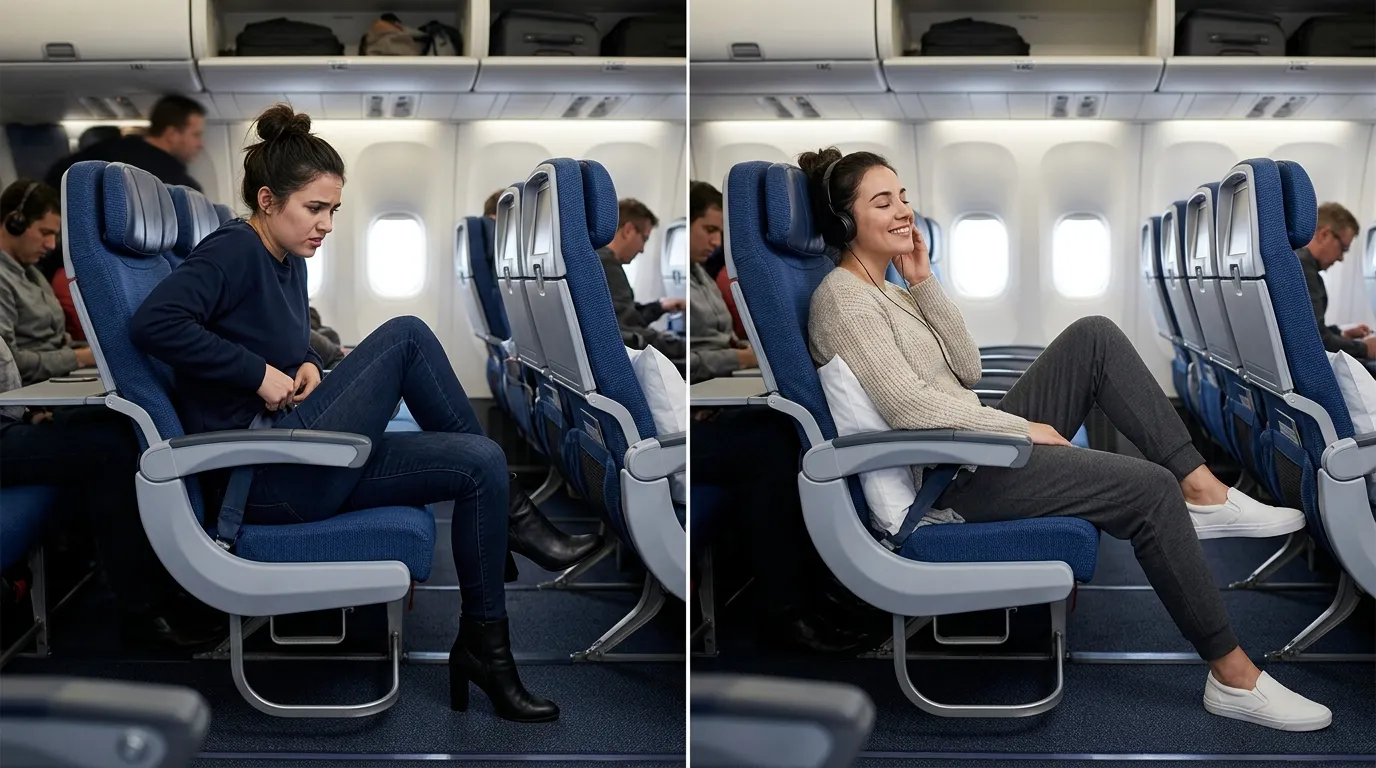
Understanding what to avoid is just as important as knowing what works. Certain clothing choices consistently make the flying experience harder than it needs to be.
Tight jeans and rigid trousers are among the worst choices for long flights. They restrict circulation, grow uncomfortable after the first hour, and leave your legs feeling stiff and sore upon landing. If you are committed to wearing jeans, choose a pair with stretch denim and a relaxed fit rather than a skinny or slim-cut style.
Synthetic fabrics like polyester trap heat and hold odor, both of which become particularly noticeable after several hours in a recycled-air environment. Unless a synthetic fabric is specifically engineered to be moisture-wicking and breathable, avoid it as the primary material in your outfit.To know more about Plane Outfits do visit Who What Wear.
Strong fragrances are not a clothing issue specifically, but worth noting because they become increasingly intrusive to surrounding passengers in the confined quarters of a cabin. Keep scent minimal when flying out of consideration for others.
Bare feet in the cabin should be avoided entirely, both for hygiene reasons and basic courtesy to fellow passengers. Bring a dedicated pair of cozy cabin socks to change into once seated, so you can remove your shoes comfortably without going fully barefoot on airplane floors.
Dressing for Short-Haul vs. Long-Haul Flights
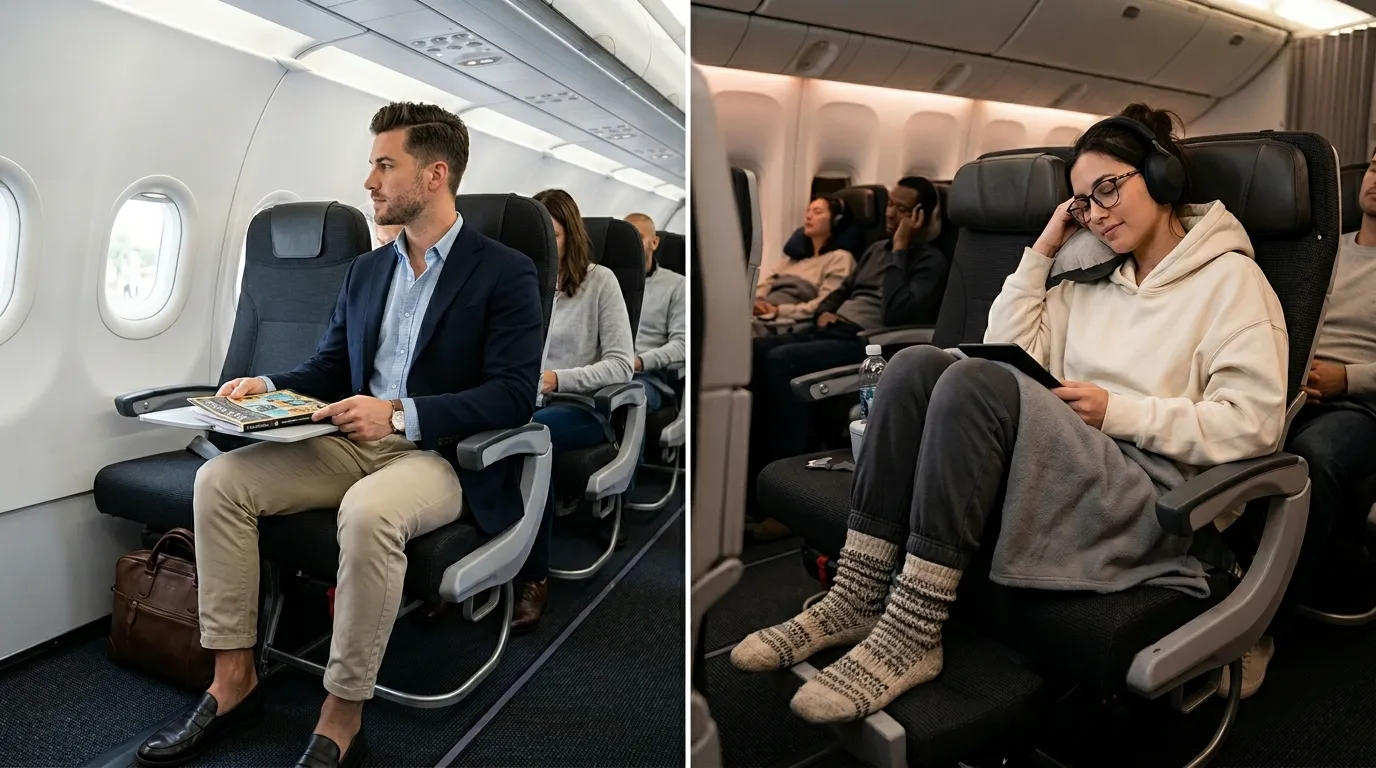
The duration of your flight should meaningfully influence your outfit decisions. For short-haul flights under three hours, you can lean slightly more toward style at the modest expense of maximum comfort, since you will not be wearing the outfit for an extended period. A fitted blazer that might feel slightly restrictive over many hours is perfectly fine for a quick flight. Smart jeans rather than joggers are a reasonable choice if you have plans directly after landing.
For long-haul flights over six hours, the calculus shifts entirely toward comfort. These are the flights where you should wear your softest clothes, your most forgiving footwear, and build in every layering option available. The outfit you board in will have been worn for potentially twelve or more hours by the time you reach your destination. Plan accordingly, and if appearance upon arrival matters, keep a change of clothes in your carry-on rather than sacrificing comfort throughout the journey.
Conclusion
The best outfit to wear on a plane is one that allows you to arrive at your destination feeling as close to rested and comfortable as air travel permits. That means prioritizing soft, breathable fabrics over stiff or synthetic ones, building in layers to handle unpredictable cabin temperatures, choosing footwear that cooperates with security checkpoints and accommodates swelling, and selecting silhouettes that do not restrict movement during extended periods of sitting.
None of this requires sacrificing style. The best travel outfits are those that look intentional and polished precisely because they were chosen with care and consideration rather than assembled in a hurry. When you dress thoughtfully for a flight, you feel better, you move through airports more easily, and you arrive at your destination in a far better state to enjoy whatever comes next. Travel is already demanding enough. Your outfit should never be the thing that makes it harder.
Frequently Asked Questions
Q1. What is the most comfortable thing to wear on a long flight?
Loose drawstring trousers or compression leggings, a breathable long-sleeve base layer, an oversized hoodie or sweater, and slip-on shoes with a pair of cabin socks to change into once seated. Merino wool or modal fabrics are particularly well-suited to long-haul journeys.
Q2. Can you wear leggings on a plane?
Absolutely. High-quality leggings with a wide, non-restrictive waistband are one of the best choices for flying. They are comfortable, easy to move in, and pair well with a variety of tops and layers. Compression leggings have the added benefit of supporting circulation during long flights.
Q3. Should you dress up or dress down for a flight?
This depends on the length of your flight and your plans upon arrival. For short flights, a slightly more polished look is manageable. For long-haul flights, comfort should take priority. If you need to look sharp upon arrival, pack a change of clothes in your carry-on rather than compromising comfort during the flight itself.
Q4. What shoes are best to wear through airport security?
Slip-on shoes without laces or excessive metal hardware are the best option. Knit slip-on sneakers and leather loafers are both ideal choices. They come off and go back on quickly at the security checkpoint and do not cause discomfort during extended wear.
Q5. Is it okay to wear jeans on a plane?
On short flights, jeans are fine. On longer flights, traditional rigid denim becomes increasingly uncomfortable due to restricted circulation and limited stretch. If you prefer to wear jeans for travel, choose a pair with stretch denim and a relaxed or straight-leg cut rather than a slim or skinny silhouette.